Every year, millions of people gather to celebrate Sri Krishna Janmashtami, a joyful festival that honors the birth of Lord Krishna. Known as the symbol of love, wisdom, compassion, and righteousness, Krishna continues to inspire people through his teachings in the Bhagavad Gita and his playful childhood stories.
The festival is celebrated with deep faith and excitement in homes, temples, and communities. From beautifully decorated shrines and devotional singing to midnight prayers and fasting, every tradition reflects devotion and gratitude toward Lord Krishna. Whether you are a spiritual traveler, a devotee, or someone interested in Indian culture, Sri Krishna Janmashtami offers a meaningful and unforgettable experience.
This complete guide explains the history, spiritual meaning, traditions, celebrations, and travel experiences surrounding Sri Krishna Janmashtami, helping you understand why this festival remains one of the most beloved Hindu celebrations across the world.
Quick Answer
Sri Krishna Janmashtami is one of the most important Hindu festivals celebrating the birth of Lord Krishna, the eighth incarnation of Lord Vishnu. Devotees observe fasting, sing devotional songs, perform midnight prayers, visit temples, decorate homes, and reenact Krishna’s childhood stories. The festival is celebrated across India and around the world with great devotion and colorful traditions.
What Is Sri Krishna Janmashtami?
Sri Krishna Janmashtami celebrates the birth of Lord Krishna, who is regarded as the eighth avatar of Lord Vishnu in Hinduism. According to ancient scriptures, Krishna was born over 5,000 years ago in Mathura, Uttar Pradesh, during a time when evil ruler King Kansa spread fear throughout his kingdom.
The festival usually falls in August or September according to the Hindu lunar calendar, specifically on the eighth day (Ashtami) of Krishna Paksha in the month of Bhadrapada. Devotees believe that Krishna appeared at midnight, making midnight worship the most important part of the celebration.
Today, Sri Krishna Janmashtami is celebrated not only in India but also in the United States, Canada, the United Kingdom, Australia, Singapore, Nepal, Mauritius, Fiji, South Africa, and many other countries where Hindu communities preserve their traditions.
Quick Facts About Sri Krishna Janmashtami
| Feature | Details |
| Festival Name | Sri Krishna Janmashtami |
| Religion | Hinduism |
| Celebrates | Birth of Lord Krishna |
| Main Deity | Lord Krishna |
| Hindu Month | Bhadrapada |
| Lunar Day | Krishna Paksha Ashtami |
| Main Celebration Time | Midnight |
| Major Ritual | Fasting and Midnight Puja |
| Famous Place | Mathura & Vrindavan |
| Celebrated In | India and Worldwide |
Why Is Sri Krishna Janmashtami Celebrated?
The celebration honors the arrival of Lord Krishna, who came to Earth to restore righteousness and protect humanity from evil. Hindu scriptures describe Krishna as the divine protector who defeated injustice while teaching compassion, truth, courage, and devotion.
Krishna’s life demonstrates that kindness and wisdom are stronger than hatred and fear. His teachings in the Bhagavad Gita continue to guide millions of people in making ethical decisions and living meaningful lives.
Many devotees celebrate Sri Krishna Janmashtami to:
- Seek Lord Krishna’s blessings
- Strengthen their faith
- Pray for peace and prosperity
- Express gratitude
- Learn from Krishna’s teachings
- Celebrate love and devotion
- Bring families together through worship
The History of Lord Krishna’s Birth
The story of Krishna’s birth is one of the most cherished narratives in Hindu tradition.
King Kansa ruled the kingdom of Mathura with cruelty and fear. During the wedding of his sister Devaki and her husband Vasudeva, a heavenly voice foretold that Devaki’s eighth child would one day end Kansa’s reign.
Terrified by the prophecy, Kansa imprisoned the couple and killed their first seven children. When Krishna was born at midnight, a miracle unfolded. The prison doors opened, the guards fell asleep, and Vasudeva carried the newborn across the flooded Yamuna River to the village of Gokul.
There, Krishna was lovingly raised by Nanda Maharaj and Mother Yashoda. As a child, Krishna became famous for his playful nature, love for butter, and miraculous acts that protected people from danger.
Eventually, Krishna returned to Mathura, defeated King Kansa, and restored justice, fulfilling the divine prophecy.
Timeline of Lord Krishna’s Early Life
| Event | Importance |
| Birth in Mathura | Arrival of Lord Krishna |
| Escape to Gokul | Protection from King Kansa |
| Childhood with Yashoda | Divine childhood stories |
| Defeating Demons | Protection of devotees |
| Lifting Govardhan Hill | Symbol of divine power |
| Defeating Kansa | Victory of good over evil |
Spiritual Significance of Sri Krishna Janmashtami

Beyond colorful celebrations, Sri Krishna Janmashtami carries profound spiritual meaning. It reminds devotees that divine wisdom can overcome ignorance and that faith can triumph over fear.
Lord Krishna represents many timeless values:
Love Without Conditions
Krishna’s relationships with his family, friends, and devotees demonstrate unconditional love, compassion, and forgiveness.
Duty Above Personal Gain
In the Bhagavad Gita, Krishna teaches Arjuna to perform his responsibilities with honesty and dedication while letting go of attachment to the results.
Faith During Difficult Times
Krishna’s birth under dangerous circumstances reminds devotees that hope and divine protection can appear even in the darkest moments.
Victory of Good Over Evil
The defeat of King Kansa symbolizes that righteousness ultimately prevails over injustice, no matter how powerful evil may seem.
Lessons We Can Learn from Lord Krishna
| Teaching | Everyday Meaning |
| Dharma | Always do what is right |
| Compassion | Help others with kindness |
| Devotion | Stay connected to God |
| Courage | Face challenges with confidence |
| Wisdom | Make thoughtful decisions |
| Humility | Stay grounded despite success |
| Patience | Trust divine timing |
Why Sri Krishna Janmashtami Matters Today
Even in today’s fast-paced world, Sri Krishna Janmashtami reminds people to slow down, reflect, and reconnect with spiritual values. Families gather to pray together, children learn timeless stories, and communities celebrate unity through music, dance, and acts of devotion.
For travelers, the festival also offers a unique opportunity to experience India’s rich cultural heritage through temple ceremonies, traditional performances, devotional singing, and vibrant decorations.
How Is Sri Krishna Janmashtami Celebrated?
Sri Krishna Janmashtami is celebrated with great devotion, colorful decorations, devotional music, fasting, temple visits, and midnight worship. While traditions vary by region, the heart of the festival remains the same—honoring the birth of Lord Krishna with faith and joy.
Homes and temples are decorated with flowers, lights, rangoli designs, and small footprints representing baby Krishna entering the house. Devotees spend the day chanting prayers, reading sacred texts, singing bhajans, and preparing special offerings.
At exactly midnight—the believed time of Krishna’s birth—bells ring, conch shells are blown, and temples perform a grand Maha Aarti. The idol of baby Krishna is placed in a beautifully decorated cradle and gently rocked by devotees while prayers fill the air.
Main Highlights of the Celebration
| Tradition | Purpose |
| Fasting | Spiritual discipline and devotion |
| Temple Visits | Offer prayers and seek blessings |
| Midnight Puja | Celebrate Krishna’s birth |
| Bhajans & Kirtans | Express devotion through music |
| Jhulan (Cradle Ceremony) | Honor baby Krishna |
| Bhagavad Gita Reading | Learn Krishna’s teachings |
| Dahi Handi | Celebrate Krishna’s playful childhood |
| Prasad Distribution | Share blessings with everyone |
Sri Krishna Janmashtami Fasting (Vrat)
Fasting is one of the most respected traditions of Sri Krishna Janmashtami. Many devotees observe a fast from sunrise until midnight, breaking it only after the birth celebration and prayers.
The fast is not only about avoiding food—it is also a time to practice self-control, prayer, gratitude, and meditation. Some people observe a strict water-only fast, while others enjoy fruits, milk, and special fasting-friendly dishes.
Common Foods During the Fast
- Fresh fruits
- Milk and yogurt
- Dry fruits and nuts
- Makhana (fox nuts)
- Sabudana khichdi
- Sama rice (barnyard millet)
- Sweet potatoes
- Coconut water
- Singhara flour dishes
- Rock salt (Sendha Namak) recipes
Types of Janmashtami Fasts
| Fast Type | Description |
| Nirjala Vrat | No food or water throughout the day |
| Phalahar | Fruits, milk, and nuts only |
| Satvik Fast | Simple fasting meals without grains |
| Partial Fast | One light meal before midnight |
Midnight Puja: The Most Sacred Moment
The most important part of Sri Krishna Janmashtami begins at midnight, when devotees believe Lord Krishna was born.
Temples become filled with devotional songs and chanting as priests perform special ceremonies. The idol of baby Krishna is bathed with sacred ingredients in a ritual known as Abhishekam.
Items Used During Midnight Puja
- Milk
- Yogurt
- Honey
- Ghee
- Sugar
- Holy water
- Tulsi leaves
- Butter
- Fresh flowers
- Incense
- Oil lamps
After the Abhishekam, Krishna is dressed in new clothes and adorned with jewelry and flower garlands. Devotees then perform Aarti, offer sweets, and gently swing the decorated cradle of baby Krishna.
Simple Janmashtami Puja Checklist
| ✔ | Task |
| ☐ | Clean the home altar |
| ☐ | Decorate with flowers and lights |
| ☐ | Place Lord Krishna’s idol or picture |
| ☐ | Prepare Panchamrit |
| ☐ | Offer butter, fruits, and sweets |
| ☐ | Chant Krishna mantras |
| ☐ | Read Bhagavad Gita or Krishna stories |
| ☐ | Perform Aarti at midnight |
| ☐ | Distribute Prasad |
| ☐ | Break the fast after worship |
Dahi Handi: A Festival of Teamwork and Joy
One of the most exciting traditions associated with Sri Krishna Janmashtami is Dahi Handi, especially in Maharashtra and nearby states.
The event recreates Krishna’s childhood habit of stealing butter from hanging clay pots. Organizers suspend a decorated pot high above the ground, filled with yogurt, butter, sweets, or prizes.
Teams of young participants, called Govindas, form human pyramids to reach and break the pot while crowds cheer, sing, and celebrate.
Besides being entertaining, Dahi Handi symbolizes:
- Teamwork
- Determination
- Unity
- Trust
- Celebration of Krishna’s playful nature
Travel Insurance USA: The Ultimate 2026 Guide to Choosing the Best Coverage & Saving Money
Why Dahi Handi Is Popular
| Feature | Meaning |
| Human Pyramid | Cooperation and teamwork |
| Clay Pot | Butter loved by Krishna |
| Celebration | Joy and community spirit |
| Music & Dance | Festive atmosphere |
| Rewards | Encouragement for participants |
Popular Rituals and Customs
Different families and communities celebrate Sri Krishna Janmashtami in unique ways, but several traditions are common across India.
Decorating Krishna’s Cradle
A small cradle is decorated with flowers, colorful fabrics, and lights. An idol of baby Krishna is placed inside, and family members gently rock the cradle while singing devotional songs.
Drawing Baby Krishna’s Footprints
Many families create tiny footprints from the entrance of their home to the prayer room using rice flour or colored paste. These footprints symbolize Lord Krishna entering the house and bringing blessings.
Bhajans and Kirtans
Devotional music continues throughout the day and night. Temples often organize live performances where devotees sing together in praise of Lord Krishna.
Reading Sacred Scriptures
Many devotees read stories from:
- Bhagavad Gita
- Bhagavata Purana
- Vishnu Purana
- Krishna Leela
These scriptures teach the values of devotion, courage, compassion, and righteousness.
Regional Celebrations Across India
Although Sri Krishna Janmashtami is celebrated nationwide, every region adds its own unique traditions.
| State | Popular Celebration |
| Uttar Pradesh | Grand celebrations in Mathura and Vrindavan |
| Maharashtra | Dahi Handi competitions |
| Gujarat | Raas Garba and Krishna temples |
| Rajasthan | Temple decorations and bhajans |
| Odisha | Bhagavad Gita recitations |
| Tamil Nadu | Rice flour footprints and home pujas |
| Karnataka | Traditional family worship |
| Andhra Pradesh | Temple festivals and cultural events |
| Telangana | Community bhajans and Krishna processions |
| West Bengal | ISKCON celebrations and devotional singing |
How Sri Krishna Janmashtami Is Celebrated Around the World

The beauty of Sri Krishna Janmashtami extends far beyond India. Hindu communities across the globe celebrate the festival with devotion and cultural pride.
United States
Temples host cultural programs, devotional singing, children’s performances, and midnight prayers. Many communities also organize vegetarian feasts and educational events about Lord Krishna’s life.
United Kingdom
Large Hindu temples welcome thousands of visitors for bhajans, dance performances, and traditional worship ceremonies.
Canada
Families gather for prayers, fasting, and community celebrations, while temples organize Krishna-themed cultural activities for children and adults.
Australia
Indian cultural organizations and temples celebrate with music, spiritual talks, and festive meals that bring together people from diverse backgrounds.
Other Countries
The festival is also widely observed in:
- Nepal
- Singapore
- Mauritius
- Fiji
- South Africa
- Malaysia
- Trinidad and Tobago
These celebrations highlight the global reach of Krishna’s teachings and the enduring traditions of Hindu communities.
Travel Tip
If you’re planning to experience Sri Krishna Janmashtami in person, arrive early at popular temples. Major destinations attract large crowds, and early arrival gives you a better chance to participate in special ceremonies, enjoy cultural performances, and experience the festive atmosphere comfortably.
Best Places to Celebrate Sri Krishna Janmashtami
Experiencing Sri Krishna Janmashtami at one of India’s famous Krishna temples is unforgettable. During the festival, these destinations come alive with devotional music, cultural performances, colorful decorations, and thousands of worshippers gathering to celebrate Lord Krishna’s birth.
Whether you’re a pilgrim or a traveler interested in Indian culture, visiting these sacred places offers a deeper understanding of the festival and its traditions.
Top Destinations for Sri Krishna Janmashtami
| Destination | Why Visit | Best Experience |
| Mathura, Uttar Pradesh | Birthplace of Lord Krishna | Midnight celebrations at Shri Krishna Janmabhoomi Temple |
| Vrindavan, Uttar Pradesh | Krishna’s childhood home | Temple bhajans, Ras Leela performances, flower decorations |
| Dwarka, Gujarat | Kingdom of Lord Krishna | Grand temple ceremonies and coastal festivities |
| Nathdwara, Rajasthan | Famous Krishna temple | Beautiful decorations and devotional singing |
| Udupi, Karnataka | Historic Krishna temple | Traditional rituals and South Indian customs |
| Mumbai, Maharashtra | Home of Dahi Handi | Spectacular human pyramid competitions |
| ISKCON Temples Worldwide | Global celebrations | Cultural programs, kirtans, and spiritual lectures |
Mathura – The Birthplace of Lord Krishna
Mathura is the heart of Sri Krishna Janmashtami celebrations. According to Hindu tradition, this sacred city is where Lord Krishna was born, making it one of the holiest destinations for devotees.
The city’s temples are decorated with flowers, lights, and colorful artwork. Thousands of pilgrims gather for midnight prayers, devotional songs, and cultural performances that recreate scenes from Krishna’s life.
What to Experience in Mathura
- Midnight Maha Aarti
- Krishna Janmabhoomi Temple celebrations
- Colorful processions
- Devotional music and dance
- Traditional sweets and prasad
- Spiritual atmosphere throughout the city
Vrindavan – The Land of Krishna’s Childhood
Located just a short drive from Mathura, Vrindavan is known for its deep connection to Lord Krishna’s childhood.
The town becomes especially vibrant during Sri Krishna Janmashtami. Temples are beautifully decorated, devotional songs continue throughout the day, and visitors can enjoy dramatic performances of Krishna’s childhood stories, known as Ras Leela.
Must-See Experiences
- Temple flower decorations
- Evening Aarti ceremonies
- Ras Leela performances
- Continuous bhajans and kirtans
- Traditional markets selling devotional items
Dwarka – Krishna’s Royal Kingdom
Dwarka, on the western coast of Gujarat, is believed to have been Lord Krishna’s kingdom after he left Mathura.
During Sri Krishna Janmashtami, the Dwarkadhish Temple hosts elaborate ceremonies, special prayers, and cultural events. The combination of spirituality and the nearby Arabian Sea creates a peaceful atmosphere for visitors.
ISKCON Temples Around the World
For travelers outside India, ISKCON temples provide an excellent opportunity to celebrate Sri Krishna Janmashtami.
Many temples organize:
- Midnight worship
- Bhagavad Gita discussions
- Vegetarian feasts
- Children’s cultural programs
- Traditional dance performances
- Live devotional music
These celebrations welcome visitors of all backgrounds, making them a great introduction to Hindu culture and Krishna devotion.
Traditional Foods Prepared During Sri Krishna Janmashtami
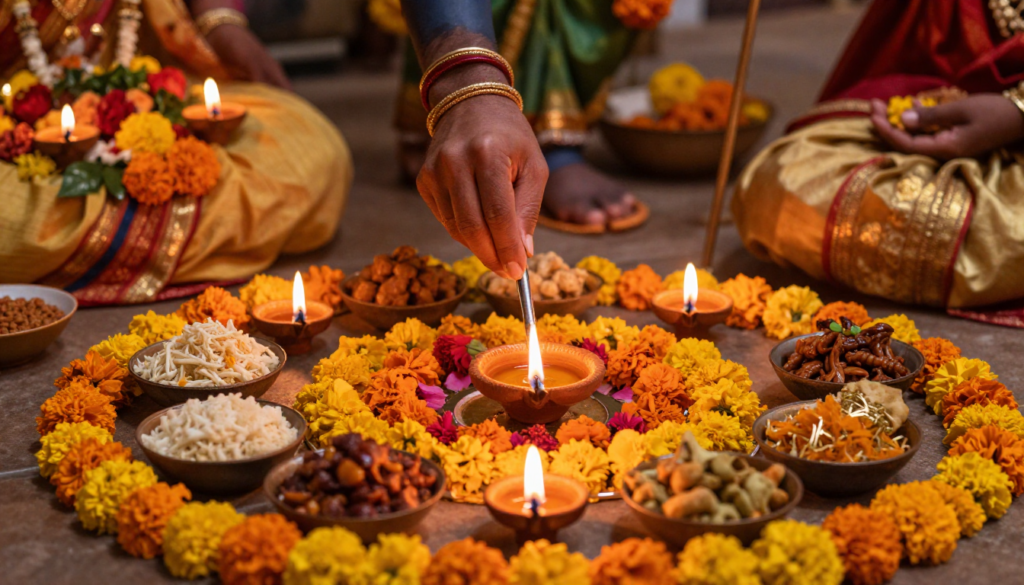
Food plays an important role in Sri Krishna Janmashtami, especially after devotees complete their fast. Since Lord Krishna is traditionally associated with butter, milk, yogurt, and sweets, many festive dishes are made using these ingredients.
All offerings are first presented to Lord Krishna as Prasad before being shared with family and friends.
Popular Janmashtami Foods
| Dish | Description |
| Makhan Mishri | Butter mixed with sugar crystals, Krishna’s favorite offering |
| Panchamrit | Sacred mixture of milk, yogurt, honey, sugar, and ghee |
| Sabudana Khichdi | Popular fasting meal |
| Kheer | Sweet rice pudding made with milk |
| Peda | Milk-based sweet often offered in temples |
| Panjiri | Nutritious sweet made with flour and dry fruits |
| Fruit Chaat | Fresh fruit salad for fasting |
| Makhana Kheer | Fox nut pudding prepared during fasting |
| Coconut Ladoo | Sweet coconut dessert |
| Dry Fruit Barfi | Rich festive sweet |
Temple Etiquette for Visitors
If you plan to attend Sri Krishna Janmashtami celebrations, following basic temple etiquette helps create a respectful and enjoyable experience.
Do
- Dress modestly.
- Remove shoes before entering.
- Keep your phone on silent.
- Join prayer respectfully.
- Follow instructions from temple volunteers.
- Accept Prasad with gratitude.
- Respect photography rules.
Don’t
- Wear revealing clothing.
- Push through crowds.
- Interrupt worship.
- Touch sacred objects without permission.
- Waste food offered as Prasad.
- Speak loudly inside the temple.
Quick Temple Etiquette Table
| Good Practice | Avoid |
| Wear traditional or modest clothing | Loud conversations |
| Arrive early | Blocking temple entrances |
| Respect local customs | Ignoring temple rules |
| Maintain cleanliness | Littering |
| Be patient in queues | Rushing during worship |
Travel Tips for Sri Krishna Janmashtami
Planning ahead can make your Sri Krishna Janmashtami trip smoother and more enjoyable, especially if you’re visiting popular destinations like Mathura or Vrindavan.
Essential Travel Tips
- Book hotels several months in advance.
- Expect large crowds near famous temples.
- Carry drinking water and stay hydrated.
- Wear comfortable walking shoes.
- Use local transportation when roads are closed.
- Keep cash for small purchases.
- Follow local festival schedules.
- Protect valuables in crowded areas.
- Travel with family or a group when possible.
- Respect local traditions and customs.
Best Time to Visit
The ideal time is one or two days before Sri Krishna Janmashtami. Arriving early gives you time to explore local attractions, avoid last-minute travel stress, and enjoy the festive atmosphere before the main celebrations begin.
What to Pack
Travel Checklist
- Comfortable clothing
- Modest temple attire
- Walking shoes
- Water bottle
- Personal medications
- Power bank
- Camera
- Umbrella or rain jacket (season dependent)
- Small backpack
- Hand sanitizer
Pros and Cons of Visiting During Sri Krishna Janmashtami
| Pros | Cons |
| Amazing cultural experience | Large crowds |
| Beautiful temple decorations | Long waiting times |
| Unique devotional atmosphere | Higher hotel prices |
| Traditional food and music | Heavy traffic |
| Memorable spiritual journey | Busy public transport |
| Colorful cultural performances | Advance planning required |
Comparison: Home Celebration vs Temple Celebration
| Feature | Home Celebration | Temple Celebration |
| Atmosphere | Peaceful and personal | Grand and festive |
| Crowd Level | Low | Very High |
| Decorations | Family-created | Professional and elaborate |
| Rituals | Personal worship | Priest-led ceremonies |
| Music | Family bhajans | Live devotional performances |
| Best For | Families | Pilgrims and travelers |
Expert Insight
For first-time visitors, attending the midnight Aarti at a well-known Krishna temple is one of the most memorable ways to experience Sri Krishna Janmashtami. If you prefer a quieter setting, consider visiting smaller local temples, where you can participate in the rituals with fewer crowds while still enjoying the spiritual atmosphere.
Common Mistakes to Avoid During Sri Krishna Janmashtami
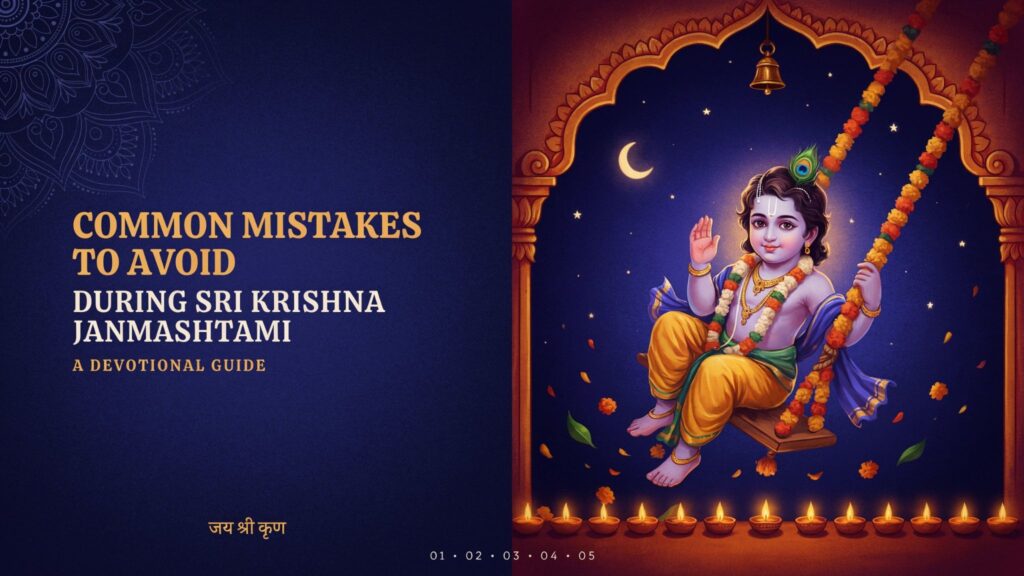
Celebrating Sri Krishna Janmashtami is about devotion, respect, and understanding the festival’s spiritual meaning. Avoiding a few common mistakes can help you have a more meaningful experience.
| Mistake | Better Approach |
| Waiting until the last minute to plan your trip | Book hotels and transportation early |
| Ignoring temple dress codes | Wear modest and comfortable clothing |
| Forgetting to check temple timings | Confirm the schedule before visiting |
| Carrying too many valuables | Bring only essential items |
| Skipping hydration during long celebrations | Drink enough water after breaking your fast |
| Standing in restricted areas | Follow volunteer and security instructions |
| Taking photos where prohibited | Always respect temple photography rules |
| Treating the festival as only a tourist event | Learn about its spiritual and cultural significance |
FAQs
What is Sri Krishna Janmashtami?
Sri Krishna Janmashtami is a Hindu festival celebrating the birth of Lord Krishna, the eighth incarnation of Lord Vishnu. It is observed with fasting, prayers, devotional music, and midnight worship.
Why is Sri Krishna Janmashtami celebrated at midnight?
According to Hindu tradition, Lord Krishna was born at midnight in Mathura. Devotees perform special prayers and Aarti at this time to commemorate his birth.
Is fasting compulsory during Janmashtami?
No. Fasting is a personal act of devotion. Many devotees observe a full or partial fast, while others participate through prayers and temple visits.
What foods are eaten after the fast?
Popular foods include Panchamrit, Makhan Mishri, Kheer, Sabudana Khichdi, fruits, milk-based sweets, and other satvik dishes.
Where is the best place to celebrate Sri Krishna Janmashtami?
Mathura and Vrindavan are considered the most significant destinations because of their close connection to Lord Krishna’s life. Many other temples across India and around the world also host beautiful celebrations.
What is Dahi Handi?
Dahi Handi is a traditional event where teams form human pyramids to break a hanging clay pot filled with yogurt or butter, recreating Lord Krishna’s playful childhood pastime.
Can non-Hindus attend Janmashtami celebrations?
Yes. Many temples welcome visitors from all backgrounds, provided they follow the temple’s rules and show respect for local customs.
What should I wear to a Krishna temple?
Wear modest, clean, and comfortable clothing that covers your shoulders and knees. Traditional attire is appreciated but not required at many temples.
Is Sri Krishna Janmashtami celebrated outside India?
Yes. Hindu communities celebrate the festival in countries including the United States, Canada, the United Kingdom, Australia, Singapore, South Africa, Fiji, Mauritius, and Nepal.
What is the main message of Sri Krishna Janmashtami?
The festival reminds us to live with compassion, honesty, courage, devotion, and faith while following the teachings of Lord Krishna.
Conclusion
Sri Krishna Janmashtami is much more than a festival—it is a celebration of faith, love, wisdom, and the triumph of good over evil. From the sacred temples of Mathura and Vrindavan to community celebrations across the world, the festival brings people together through prayer, music, fasting, and acts of devotion.
Whether you choose to celebrate at home, visit a temple, or travel to one of India’s most sacred destinations, Sri Krishna Janmashtami offers a meaningful opportunity to reflect on Lord Krishna’s timeless teachings of compassion, courage, duty, and devotion. By participating respectfully and embracing the festival’s spiritual essence, you can create lasting memories while gaining a deeper appreciation of India’s rich cultural heritage.