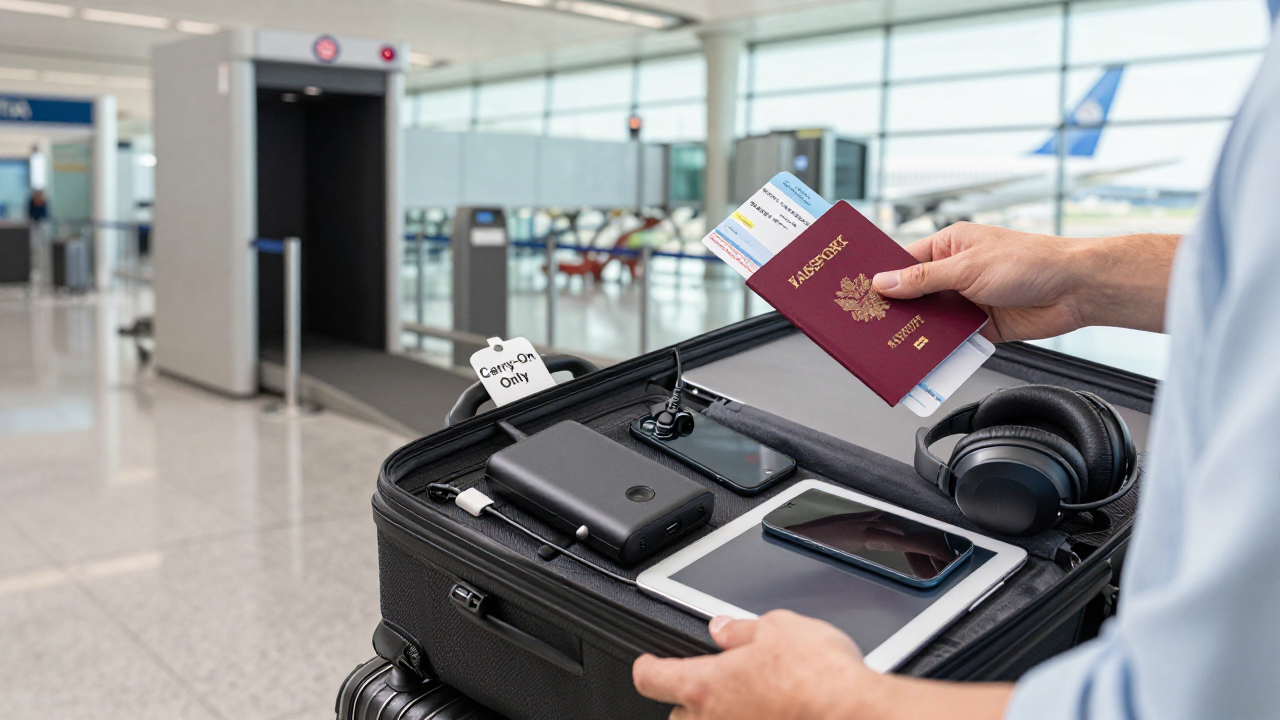
If you’re wondering, Can You Bring a Power Bank on a Plane, the answer is yes—provided you follow TSA and airline safety rules. Portable chargers have become essential travel accessories, helping passengers keep phones, tablets, laptops, cameras, and other devices powered throughout long trips.
However, because power banks contain lithium-ion batteries, airlines have strict safety regulations regarding how they must be packed. Knowing these rules before arriving at the airport can help you avoid delays, confiscation, or unexpected problems during security screening.
This complete guide explains everything U.S. travelers need to know in 2026, including TSA regulations, FAA battery limits, airline policies, international travel considerations, and practical packing tips.
Quick Answer
Yes, you can bring a power bank on a plane—but only in your carry-on bag. According to TSA and FAA regulations, portable chargers that use lithium-ion batteries are not allowed in checked luggage because they pose a potential fire risk. Most travelers can carry power banks up to 100Wh without airline approval. Batteries between 100Wh and 160Wh usually require airline permission, while those over 160Wh are generally prohibited on passenger flights.
Why Airlines Regulate Power Banks
Power banks contain rechargeable lithium-ion batteries. While these batteries are generally safe, damaged or defective batteries can occasionally overheat.
This overheating process is called thermal runaway, which can cause smoke, fire, or extreme heat. Although these incidents are rare, airlines take them seriously because fires inside an aircraft cargo hold are much harder to detect and extinguish than fires inside the passenger cabin.
For this reason, aviation authorities require passengers to keep power banks in their carry-on baggage where cabin crews can quickly respond if a battery malfunctions.
Main Reasons for These Rules
- Prevent lithium battery fires
- Allow quick response to overheating
- Protect passengers and crew
- Reduce cargo fire risks
- Improve overall flight safety
2026 TSA Rules for Power Banks
The Transportation Security Administration (TSA) allows passengers to carry portable chargers that contain lithium batteries, but there are important restrictions.
TSA Rules at a Glance
| Rule | Allowed? |
| Carry power bank in carry-on | ✅ Yes |
| Pack in checked luggage | ❌ No |
| Charge devices during flight | ✅ Usually Yes |
| Loose lithium batteries in checked bag | ❌ No |
| Multiple power banks | ✅ Usually Allowed (reasonable quantity) |
Carry-On Bags
Power banks should always remain inside your carry-on luggage or personal item.
Examples include:
- Backpack
- Laptop bag
- Purse
- Camera bag
- Small travel bag
Keeping the battery with you allows flight attendants to respond quickly if there is any sign of overheating.
Checked Baggage
Never place a loose power bank inside checked luggage.
Airport security may:
- Remove it
- Delay your baggage
- Confiscate the battery
- Require you to repack your luggage
Even if your checked suitcase contains electronic devices, removable power banks should always be carried separately in the cabin.
FAA Lithium Battery Guidelines
The Federal Aviation Administration (FAA) provides additional guidance on lithium batteries.
The key factor isn’t the battery’s physical size—it’s its watt-hour (Wh) rating.
Most manufacturers print this information directly on the power bank.
If it isn’t listed, you can calculate it:
Wh = (Voltage × mAh) ÷ 1000
Example
A power bank rated:
- 20,000mAh
- 5V
Calculation:
20,000 × 5 ÷ 1000
= 100Wh
That means it’s generally allowed without airline approval.
FAA Battery Limits
| Battery Capacity | Allowed? |
| Up to 100Wh | ✅ Yes |
| 101–160Wh | ✅ Airline approval required |
| Over 160Wh | ❌ Not allowed for passengers |
These limits apply to most commercial airlines operating in the United States.
Why the 100Wh Limit?
Research shows smaller lithium batteries present significantly lower fire risks than larger, high-capacity batteries.
Most common portable chargers sold for smartphones fall below the 100Wh limit, making them suitable for air travel.
Carry-On vs. Checked Bags: Where Should You Pack Your Power Bank?
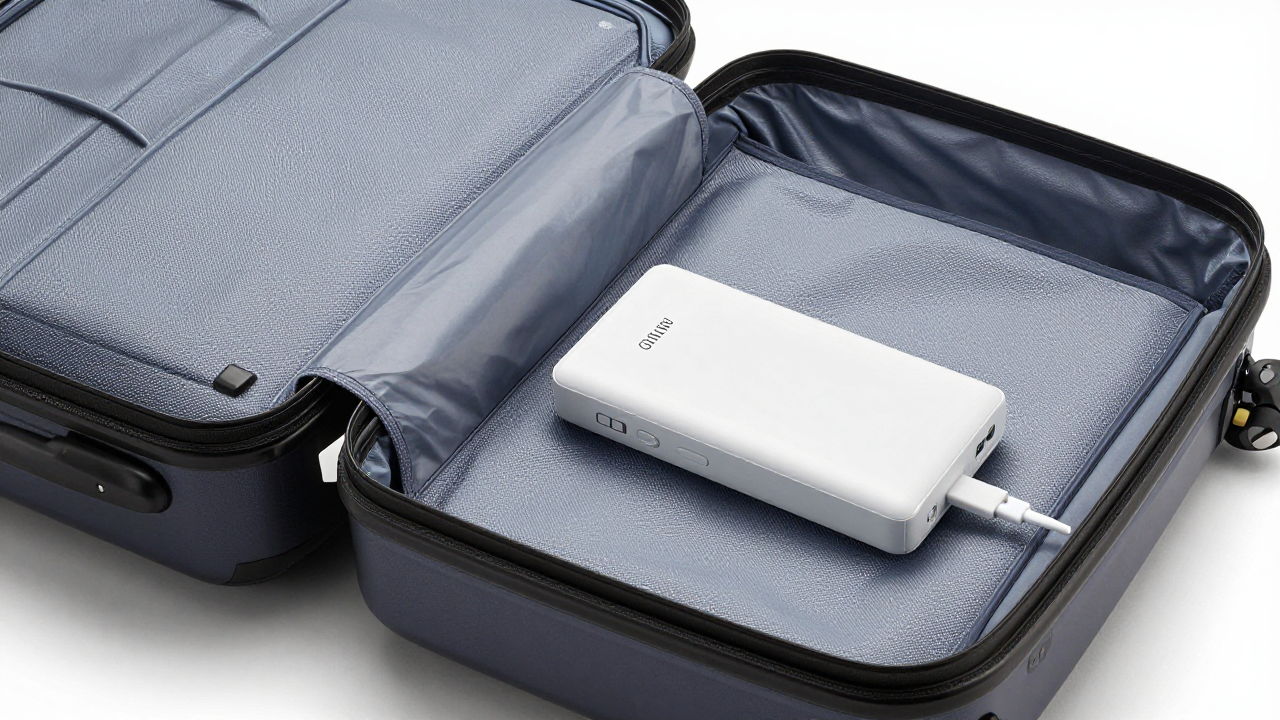
One of the most common travel questions is whether a power bank belongs in your carry-on or checked luggage. The answer is simple: always pack it in your carry-on bag.
Lithium-ion batteries can overheat if they are damaged or have a manufacturing defect. If this happens in the aircraft cabin, flight attendants can quickly respond. If the same incident occurs in the cargo hold, it is much harder to detect and manage.
Carry-On vs. Checked Baggage Comparison
| Feature | Carry-On Bag | Checked Bag |
| Power bank allowed | ✅ Yes | ❌ No |
| TSA approval | ✅ Yes | ❌ Not allowed |
| Cabin crew can respond to overheating | ✅ Yes | ❌ No |
| Recommended by FAA | ✅ Yes | ❌ No |
| Risk of confiscation | Low | High |
Best Practice
Keep your power bank in:
- Your backpack
- Laptop bag
- Purse
- Personal item under the seat
Avoid placing it inside checked baggage, even if it is switched off.
How Many Power Banks Can You Bring on a Plane?
Most airlines allow passengers to carry more than one power bank for personal use.
However, there are limits designed to prevent passengers from transporting large numbers of lithium batteries.
General Guidelines
| Battery Size | Typical Allowance |
| Up to 100Wh | Several for personal use |
| 100–160Wh | Usually up to two with airline approval |
| Over 160Wh | Not permitted |
For most travelers carrying:
- one phone charger,
- one laptop battery,
- and one backup power bank,
there should be no issue.
If you’re traveling with multiple high-capacity batteries for photography, videography, or work, contact your airline before your flight.
Can You Charge Your Devices During the Flight?
In most cases, yes.
Many airlines allow passengers to use power banks during the flight to charge:
- Smartphones
- Tablets
- Smartwatches
- Wireless earbuds
- Cameras
- E-readers
Some airlines may ask passengers to stop charging devices during takeoff and landing.
Always follow crew instructions.
Can You Use a Power Bank to Charge a Laptop?
Yes, provided the power bank:
- supports USB-C Power Delivery (PD),
- has enough capacity,
- stays within airline battery limits.
Modern laptops often require:
- 45W
- 65W
- 100W charging output
Not every portable charger can provide this level of power.
Before purchasing a travel power bank, verify:
- Output wattage
- Battery capacity
- Airline compliance
Popular Power Bank Sizes Explained
Many travelers only know the battery capacity in mAh, while airlines use Wh (Watt-hours).
Here’s a simple guide.
| Capacity | Approximate Wh | Airline Friendly |
| 5,000 mAh | 18.5 Wh | ✅ Yes |
| 10,000 mAh | 37 Wh | ✅ Yes |
| 20,000 mAh | 74 Wh | ✅ Yes |
| 26,800 mAh | 99 Wh | ✅ Yes |
| 30,000 mAh | 111 Wh | Airline approval needed |
| 50,000 mAh | 185 Wh | ❌ Usually prohibited |
This table helps travelers choose a power bank before buying one.
Airline-Specific Rules May Vary
While TSA and FAA rules apply across the United States, individual airlines may have additional restrictions.
Some airlines limit:
- Number of batteries
- Maximum battery capacity
- Charging during flight
- Storage requirements
Before Flying
Always check your airline if you are carrying:
- Extra batteries
- Professional camera equipment
- Drone batteries
- Large laptop batteries
- High-capacity power banks
International Flights: Do the Rules Change?
Generally, international aviation authorities follow similar standards.
Organizations like the International Civil Aviation Organization (ICAO) and the International Air Transport Association (IATA) have comparable safety regulations.
However, airlines in different countries may have stricter rules.
For example, some airlines:
- prohibit using power banks during flight,
- require battery terminals to be protected,
- inspect high-capacity batteries separately.
Before traveling internationally:
✔ Check your departure airline.
✔ Check your connecting airline.
✔ Review destination country requirements.
Going Through Airport Security with a Power Bank
Passing through TSA screening is usually straightforward.
Security officers may ask you to remove large electronics from your bag.
Sometimes they may inspect:
- Portable chargers
- Laptop batteries
- Camera batteries
If requested:
- Place the power bank in a screening tray.
- Keep manufacturer labels visible.
- Avoid carrying damaged batteries.
Travel Checklist for Flying with a Power Bank
Before leaving for the airport, make sure you’ve completed this checklist.
✔ Power Bank Travel Checklist
- Carry power bank in your carry-on
- Verify battery capacity
- Keep battery undamaged
- Charge before travel
- Protect charging ports
- Pack charging cable
- Check airline policy
- Label batteries if necessary
- Avoid counterfeit chargers
- Keep batteries easily accessible
This checklist helps ensure a smooth security screening experience.
Common Mistakes Travelers Make
Avoid these common errors.
| Mistake | Better Choice |
| Packing power bank in checked luggage | Keep it in carry-on |
| Bringing damaged battery | Replace it before travel |
| Buying oversized battery | Stay below 100Wh |
| Ignoring airline policy | Check airline website |
| Carrying counterfeit charger | Purchase from reputable brands |
Even experienced travelers occasionally overlook airline battery rules
Expert Tips for Flying with a Power Bank
Travel experts recommend these simple habits:
1. Choose Reputable Brands
Quality batteries include built-in protection against:
- Overcharging
- Short circuits
- Overheating
2. Keep Battery Between 30–80%
A partially charged battery is generally better for long trips than one stored at 100% for extended periods.
3. Protect Charging Ports
Use:
- Silicone covers
- Protective cases
- Small travel pouches
This prevents accidental short circuits.
4. Label Your Battery
If the watt-hour rating isn’t clearly visible, keep the product packaging or specifications available.
Some security officers may ask to verify battery capacity.
5. Don’t Wait Until Boarding
Charge your devices before arriving at the airport.
Airport outlets are often crowded, and you’ll have more flexibility if your phone is already charged.
Pros and Cons of Bringing a Power Bank on a Plane
Power banks are one of the most useful travel accessories, but it’s important to understand both their benefits and limitations.
| Pros | Cons |
| Keeps your phone charged during delays | Must be packed in your carry-on only |
| Useful for long flights and layovers | Large-capacity models may require airline approval |
| Charges multiple devices | Damaged batteries are not allowed |
| Ideal for international travel | Some airlines restrict in-flight use |
| Helpful during airport emergencies | Oversized batteries may be confiscated |
| Reduces dependence on airport charging stations | Can add extra weight to your carry-on |
FAQs
Can you bring a power bank on a plane in your carry-on?
Yes. Power banks containing lithium-ion batteries must be packed in your carry-on bag or personal item. They are generally not allowed in checked baggage.
Can you put a power bank in checked luggage?
No. TSA and FAA regulations prohibit loose lithium-ion power banks in checked baggage because they pose a fire risk.
What size power bank is allowed on a plane?
Most airlines allow power banks up to 100Wh without approval. Batteries between 101Wh and 160Wh usually require airline permission.
Can I bring a 20,000mAh power bank on a plane?
Yes. A typical 20,000mAh power bank is approximately 74Wh, which is well within the standard airline limit.
Is a 30,000mAh power bank allowed?
Some 30,000mAh power banks exceed 100Wh. Check the watt-hour rating on your device. If it is above 100Wh, airline approval may be required.
Can you use a power bank during a flight?
Many airlines allow passengers to charge devices using a power bank during the flight. However, always follow crew instructions, as some airlines may restrict use during takeoff and landing.
How many power banks can I carry?
Most airlines allow several power banks for personal use if each is within the approved battery capacity. Always check your airline’s policy for exact limits.
What happens if TSA finds a power bank in checked baggage?
Your checked bag may be delayed, opened for inspection, or the power bank may be removed before your luggage is loaded onto the aircraft.
Are power banks allowed on international flights?
Yes. Most international airlines follow similar lithium battery rules, but individual airlines may have stricter policies. Always review the rules for every airline on your itinerary.
How do I know if my power bank is airline approved?
Check the label on the power bank for its Wh (Watt-hour) rating. If it is 100Wh or less, it is generally allowed in carry-on baggage without special approval.
Conclusion
If you’ve been asking, Can You Bring a Power Bank on a Plane, the good news is that the answer is yes—as long as you follow the applicable airline and aviation safety rules. Packing your power bank in your carry-on, checking its watt-hour rating, and ensuring it is in good condition can help you avoid delays at airport security and travel with confidence.
Most travelers use power banks to keep smartphones, tablets, laptops, and other essential devices charged during long flights, layovers, and unexpected delays. By understanding TSA and FAA guidance and reviewing your airline’s battery policy before departure, you can enjoy a safer and more convenient journey.
Whether you’re traveling for business, vacation, or an international adventure, taking a few minutes to prepare your electronics properly will make your trip smoother. Before your next flight, double-check your power bank’s capacity, pack it in your carry-on, and you’re ready to take off with peace of mind.