New York City has no shortage of impressive buildings, but few transportation spaces are as visually striking as the Oculus Transportation Hub. Located at the World Trade Center in Lower Manhattan, the Oculus combines public transportation, architecture, shopping, dining, and pedestrian connections in one enormous complex. Its bright white structure and soaring ribs create a dramatic contrast with the surrounding skyscrapers.
For travelers, the Oculus is especially useful because it sits in one of the busiest sightseeing areas of Manhattan. You can arrive by PATH from New Jersey, connect to New York City subway services, walk through the World Trade Center campus, shop inside the complex, or continue toward nearby attractions. The World Trade Center campus currently provides access to 12 subway lines and PATH services connecting Manhattan with New Jersey
This complete 2026 guide explains how the Oculus Transportation Hub works, what to see, how to navigate it, where it connects, what attractions are nearby, and how to make your visit easier.
Quick Answer
The Oculus Transportation Hub is the spectacular transportation center at the World Trade Center in Lower Manhattan. Designed by architect Santiago Calatrava, it combines the World Trade Center PATH station, access to 12 subway lines, pedestrian connections, shopping, dining, and links to other parts of the World Trade Center campus.
For visitors, the Oculus is more than a place to catch a train. Its dramatic white interior makes it one of New York City’s most recognizable modern architectural spaces. It is also close to major attractions including the 9/11 Memorial & Museum, One World Trade Center, Brookfield Place, Wall Street, and Battery Park.
What Is the Oculus Transportation Hub?
The Oculus is the popular name for the World Trade Center Transportation Hub. The Port Authority of New York and New Jersey owns and operates the transportation hub as part of the 16-acre World Trade Center campus.
The building opened to the public in 2016 and quickly became an architectural landmark in Lower Manhattan. It was designed by Santiago Calatrava as part of the redevelopment of the World Trade Center site.
The Oculus serves several purposes at once:
- PATH rail transportation
- Connections to NYC subway services
- Pedestrian routes around the World Trade Center
- Shopping and dining
- Access to nearby office towers
- Connections toward Brookfield Place
- A major architectural attraction
The Port Authority describes the Oculus as home to the World Trade Center PATH station and access to 12 subway lines, while the World Trade Center campus provides additional transportation connections.
Why Is It Called the Oculus?
“Oculus” is a term associated with an eye-like architectural opening. The building’s design uses a large central skylight and dramatic white ribs that create the impression of a bird or dove opening its wings.
The Port Authority explains that Calatrava’s design uses white metal-clad steel ribs that reach upward in a symbolic gesture resembling a hand releasing a dove.
Where Is the Oculus in New York City?
The Oculus is in Lower Manhattan, directly within the World Trade Center complex.
Its location makes it convenient for exploring some of the most important attractions in downtown Manhattan.
Nearby Landmarks
Some major places within the surrounding area include:
| Attraction | Approximate relationship |
| 9/11 Memorial | Adjacent to the World Trade Center campus |
| One World Trade Center | Directly beside the complex |
| Brookfield Place | Connected through the West Concourse |
| Wall Street | Short walk |
| New York Stock Exchange | Short walk |
| Battery Park | Walkable |
| One World Observatory | Inside One World Trade Center |
| Statue of Liberty ferry area | Accessible by walking or transit |
The World Trade Center campus has pedestrian connections throughout the site, including a connection to Brookfield Place through the West Concourse
Best Location for First-Time Visitors
If you are visiting Lower Manhattan for sightseeing, the Oculus makes a useful starting point.
You can combine it with:
Oculus architecture
9/11 Memorial
One World Trade Center
Wall Street
Charging Bull area
Battery Park
Statue of Liberty sightseeing
How to Get to the Oculus Transportation Hub
One of the biggest advantages of the Oculus is its transportation connectivity.
The World Trade Center campus can be reached by subway, PATH, bus, ferry connections, walking, cycling, and nearby vehicle services. The official World Trade Center site lists access to 12 subway lines, two PATH lines to New Jersey, ferry routes, MTA buses, bike infrastructure, and nearby airport connections.
By NYC Subway
The Oculus connects with the extensive New York City subway network.
This is often the easiest option if you are already exploring Manhattan.
Look for subway directions leading toward:
- World Trade Center
- Fulton Street
- Cortlandt Street
- Chambers Street
- Broadway–Nassau area
Because the World Trade Center and Fulton Street complexes connect through pedestrian passages, visitors may find that their subway route does not end exactly where they expect.
By PATH Train
PATH is especially important for travelers coming from New Jersey.
The World Trade Center is the Manhattan terminal for PATH services from New Jersey, including connections involving Newark and Hoboken. Current PATH information shows the World Trade Center station as part of both Newark–World Trade Center and Hoboken–World Trade Center services.
PATH also introduced expanded weekend service in 2026, making regional travel more convenient for many riders
By Bus
MTA buses serve Lower Manhattan, although subway and PATH services are generally more useful for visitors covering multiple parts of the city.
By Ferry
The wider World Trade Center area connects with the Lower Manhattan waterfront and nearby ferry services.
By Walking
If you are staying in Lower Manhattan, walking may be the easiest option.
The area around the Oculus is pedestrian-friendly, and many attractions are close enough to combine into a walking itinerary.
Oculus PATH Station: What Travelers Should Know
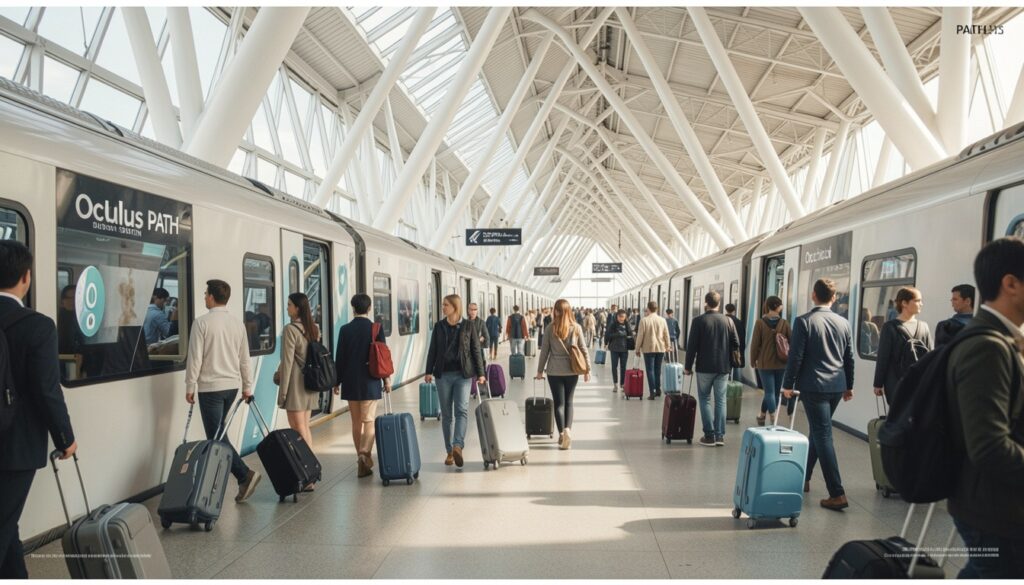
The World Trade Center PATH station is one of the most important parts of the Oculus.
PATH provides rail service between New York and New Jersey, making the Oculus particularly useful for visitors staying in New Jersey or arriving from Newark-area locations.
Current PATH information shows the World Trade Center as a station on the Newark–World Trade Center and Hoboken–World Trade Center routes.
PATH From Newark
If you are traveling from Newark, check the current PATH schedule before leaving because service patterns and frequency can change.
The official PATH system provides live schedules, service alerts, elevator information, and planned maintenance updates.
PATH From Hoboken
Hoboken also has direct PATH service toward World Trade Center.
This can be useful if your hotel is in Hoboken or you are spending time on the New Jersey waterfront.
Important 2026 PATH Payment Change
Travelers should pay attention to a major upcoming change.
PATH states that SmartLink Cards and MetroCards will no longer be accepted on PATH beginning September 1, 2026. PATH’s TAPP system allows riders to pay using a contactless credit or debit card or a smart device.
Always check official PATH information immediately before traveling because fares, payment rules, schedules, and service conditions can change.
Oculus Subway Connections
The Oculus is not simply a PATH station. It is integrated into a much larger subway and pedestrian network.
The World Trade Center campus provides access to 12 subway lines.
This makes the Oculus useful for visitors traveling between Lower Manhattan and other parts of NYC.
Why the Subway Connection Matters
Suppose you are staying near Times Square but want to visit:
- 9/11 Memorial
- Wall Street
- One World Observatory
- Statue of Liberty
- Battery Park
- Financial District
Instead of relying on taxis or rideshares, you can use the subway and walk between nearby attractions.
OMNY and Subway Travel
New York City’s subway payment system has been transitioning to OMNY. Before your trip, check the current MTA fare and payment information because fares and fare policies can change.
The MTA’s 2026 fare materials show changes to subway and bus pricing and weekly fare-cap arrangements
The Architecture of the Oculus
For many visitors, architecture is the main reason to see the Oculus.
Santiago Calatrava designed the transportation hub with an enormous white structural system that creates a dramatic interior.
The central hall is especially impressive because of its height, symmetry, white surfaces, and natural light.
What Makes the Design Special?
The Oculus features:
- White steel ribs
- Large open interior spaces
- A dramatic central skylight
- White marble surfaces
- Long pedestrian corridors
- Strong geometric symmetry
- Extensive natural light
Port Authority documentation also identifies white Carrera marble and radiant floor heating among the Oculus’s features.
Best Photography Spots
For travel photography, try:
- The center of the main hall
- Looking upward toward the skylight
- Symmetrical views along the main floor
- Exterior views from Oculus Plaza
- Wide-angle views showing visitors for scale
A wide-angle lens can help capture the building’s full vertical scale.
Shopping and Dining at the Oculus

The Oculus also functions as a shopping and dining destination.
Westfield shops and dining are located throughout the complex. The World Trade Center’s current campus information lists daily operating hours for the shopping area, although individual stores and restaurants may have different schedules.
What Can You Find?
Depending on current tenants, visitors can find:
- Fashion stores
- Specialty retailers
- Cafés
- Restaurants
- Grab-and-go food
- Services for commuters
For tourists, the shopping area can be useful when you want a quick meal or break without leaving the World Trade Center campus.
Should You Eat at the Oculus?
It depends on your itinerary.
If your priority is sightseeing, you may want to keep your meal quick and continue exploring Lower Manhattan.
If you want a more relaxed experience, compare nearby restaurants in the Financial District and Battery Park area.
Best Things to Do Near the Oculus
One of the biggest reasons to visit the Oculus is its location.
You can easily build a Lower Manhattan sightseeing day around it.
Visit the 9/11 Memorial
The 9/11 Memorial is located within the World Trade Center campus.
Allow enough time to visit respectfully and understand the site’s historical significance.
Explore One World Trade Center
One World Trade Center dominates the Lower Manhattan skyline.
The building is home to One World Observatory on floors 100 through 102.
Walk Through the Financial District
From the Oculus, you can walk toward:
- Wall Street
- Federal Hall
- New York Stock Exchange
- Trinity Church
- Bowling Green
Continue to Battery Park
Battery Park provides waterfront views and is a convenient place to continue your Lower Manhattan walk.
See the Statue of Liberty From the Waterfront
You can continue toward the waterfront for views of the Statue of Liberty or access to Statue City Cruises departure facilities.
Visit Brookfield Place
Brookfield Place is connected to the World Trade Center campus through the West Concourse.
Oculus Transportation Hub vs. Other NYC Transit Centers
New York has several major transportation centers. Each serves a different purpose.
| Transit Center | Best For | Main Advantage |
| Oculus | Lower Manhattan + New Jersey | PATH and subway connectivity |
| Grand Central Terminal | Midtown + regional rail | Major rail landmark |
| Moynihan Train Hall | Long-distance rail | Amtrak and Penn Station access |
| Fulton Center | Lower Manhattan subway | Extensive subway connections |
| Port Authority Bus Terminal | Intercity/regional buses | Bus transportation |
| Atlantic Terminal | Brooklyn connections | Subway and rail access |
The Oculus stands out because transportation and architecture are combined so closely.
It feels more like a landmark than a traditional station.
Pros and Cons of Visiting the Oculus
| Pros | Cons |
| Stunning modern architecture | Can become crowded |
| Excellent transportation connections | Easy to get confused underground |
| PATH access to New Jersey | Large complex requires walking |
| Close to major attractions | Some areas are primarily commuter spaces |
| Shopping and dining available | Store hours can vary |
| Great photography opportunities | Transit service can change |
| Convenient for Lower Manhattan | Not every attraction is inside the Oculus |
Is the Oculus Worth Visiting?
Yes.
Even if you are not using PATH or the subway, the Oculus is worth adding to a Lower Manhattan itinerary if you enjoy architecture, photography, shopping, or urban design.
Best Time to Visit the Oculus

The best time depends on your goal.
For Photography
Go earlier in the day when natural light enters the building and commuter crowds may be lighter.
For Architecture
Midday can provide excellent visibility of the interior structure.
For Transit
Travel during normal operating periods, but check current service alerts before leaving.
For a Lower Manhattan Walking Tour
Morning or early afternoon works well because you can continue from the Oculus toward the 9/11 Memorial, Financial District, and Battery Park.
For a Quieter Experience
Avoid major commuting periods if your primary goal is photography or sightseeing.
Remember that the Oculus is an active transportation facility, not simply a tourist attraction.
Accessibility and Visitor Facilities
Accessibility is an important part of planning any NYC transit trip.
The official PATH system lists World Trade Center among its elevator-accessible stations.
The World Trade Center campus also provides visitor facilities and connections across the complex.
Travelers With Mobility Needs
Before traveling:
Check elevator status.
Review current PATH service alerts.
Check subway accessibility information.
Allow extra time for transfers.
Confirm the best accessible entrance.
This is especially important because large transportation complexes can involve long corridors and multiple levels.
The World Trade Center also publishes campus updates covering transportation, facilities, and temporary changes.
Common Mistakes Visitors Make
Even experienced travelers can make simple mistakes at the Oculus.
Treating It Like Only a Tourist Attraction
The Oculus is a working transportation hub.
Commuters use it every day, so avoid blocking walkways for photographs.
Not Checking Service Changes
PATH and subway service can change because of maintenance, events, construction, or emergencies.
Check official updates before leaving.
Assuming Every Entrance Leads to the Same Place
The World Trade Center campus has multiple entrances and connected areas.
Pay attention to signs.
Underestimating Walking Distance
The complex is large.
A route that looks short on a map can involve substantial indoor walking.
Ignoring the Weather
The Oculus is useful when moving around Lower Manhattan during poor weather, but you will still need to walk outdoors between many attractions.
Forgetting Payment Changes
PATH is transitioning away from SmartLink Cards and MetroCards beginning September 1, 2026
Check payment requirements before your trip.
Expert Tips for Visiting the Oculus

Here are practical tips that can make your visit easier.
Use It as a Starting Point
Instead of visiting the Oculus separately, make it the first stop on your Lower Manhattan itinerary.
Take Photos From the Center
The central area provides some of the best symmetrical architectural views.
Look Up
Many visitors focus on the floor and miss the building’s most impressive feature: its enormous structural ribs and skylight.
Check PATH Before Leaving
Use the official PATH website for live schedules and service alerts. Current PATH information includes live times, service changes, accessibility updates, and station information
Allow Time for Security and Crowds
Large events and busy travel periods can increase pedestrian traffic.
Combine Nearby Attractions
A good itinerary can include:
Oculus → 9/11 Memorial → One World Trade Center → Wall Street → Battery Park
Use Public Transportation
For most visitors, public transit is more practical than arranging a car around Lower Manhattan.
Respect the Space
The World Trade Center is both a busy transportation center and a place of remembrance. Follow posted rules and be considerate when taking photos.
Oculus Transportation Hub Visitor Checklist
Use this checklist before visiting:
- Check subway service
- Check PATH service
- Confirm payment method
- Save your hotel address
- Download or open a transit map
- Check elevator accessibility if needed
- Plan nearby attractions
- Wear comfortable walking shoes
- Bring a phone charger
- Allow extra time for transfers
- Check current attraction hours
- Respect the World Trade Center site
- Avoid blocking commuter walkways while photographing
- Check official updates on the day of your visit
How Long Should You Spend at the Oculus?
If you are visiting only for the architecture, 30–60 minutes may be enough.
If you are using it as a transportation stop while shopping or exploring nearby attractions, you may spend several hours in the broader World Trade Center area.
A first-time Lower Manhattan itinerary could look like:
| Time | Activity |
| 9:00 AM | Arrive at Oculus |
| 9:15 AM | Explore architecture and take photos |
| 10:00 AM | Visit 9/11 Memorial |
| 12:00 PM | Lunch nearby |
| 1:00 PM | One World Trade Center/Observatory |
| 3:00 PM | Walk through Financial District |
| 4:30 PM | Battery Park |
| Evening | Return via subway or PATH |
The exact timing depends on attraction tickets, crowds, weather, and transportation conditions.
Is the Oculus Transportation Hub Free to Visit?
The Oculus itself does not require a sightseeing admission ticket.
Visitors can enter the public areas of the transportation hub, although transportation services require the appropriate fare. Shopping, dining, and individual attractions may have their own prices.
This makes the Oculus a useful free architectural stop during a Lower Manhattan sightseeing day.
However, access conditions can vary, and some areas may have restrictions or changes because of security, maintenance, or special events.
Is the Oculus Good for Families?
Yes, especially for families interested in architecture and city transportation.
Children may enjoy the huge interior space and unusual design, while parents can use the complex as a practical transportation connection.
For families, consider combining the visit with nearby attractions rather than spending the entire day inside the transit hub.
Keep children close in busy pedestrian areas, particularly during commuter periods.
Is the Oculus Transportation Hub Worth Visiting in 2026?

Absolutely.
The Oculus remains one of the most distinctive modern buildings in New York City and one of the most useful transportation points in Lower Manhattan.
Its value comes from the combination of:
- Striking architecture
- PATH connections
- Subway access
- Shopping
- Dining
- World Trade Center attractions
- Walkability
- Connections to New Jersey
- Proximity to the Financial District
The transportation side is also evolving. PATH introduced a major weekend service expansion in 2026, while the system is moving toward TAPP contactless payments and away from SmartLink and MetroCard acceptance starting September 1, 2026.
For the most accurate travel planning, always verify schedules, fares, entrance conditions, and service alerts shortly before your visit.
Frequently Asked Questions
What is the Oculus Transportation Hub?
The Oculus is the nickname for the World Trade Center Transportation Hub in Lower Manhattan. It includes the World Trade Center PATH station, subway connections, pedestrian passages, shopping, and dining.
Where is the Oculus located?
The Oculus is located at the World Trade Center in Lower Manhattan, New York City.
Is the Oculus free to enter?
Public areas of the Oculus can generally be visited without an admission ticket. However, transportation services and individual attractions require their own fares or tickets.
Does the Oculus have a subway station?
The Oculus is integrated into the World Trade Center’s extensive subway network. The World Trade Center campus provides access to 12 subway lines
Can I take PATH from New Jersey to the Oculus?
Yes. The World Trade Center PATH station serves routes connecting Lower Manhattan with New Jersey, including Newark and Hoboken services.
Can I take pictures inside the Oculus?
Visitors commonly photograph the architecture, but you should avoid obstructing pedestrian routes and follow posted security and photography rules.
What attractions are near the Oculus?
Nearby attractions include the 9/11 Memorial & Museum, One World Trade Center, One World Observatory, Wall Street, Battery Park, and Brookfield Place.
Is the Oculus accessible?
Yes. The World Trade Center PATH station is listed among PATH’s elevator-accessible stations. Check current elevator status before traveling.
When is the best time to visit the Oculus?
Morning is often a good choice for photography and sightseeing. If you want to avoid heavy commuter crowds, consider visiting outside peak commuting periods.
Can I use a MetroCard on PATH in 2026?
PATH states that SmartLink Cards and MetroCards will no longer be accepted starting September 1, 2026. Its TAPP system supports contactless credit/debit cards and smart devices.
Conclusion
The Oculus Transportation Hub is one of the best examples of how transportation and architecture can become part of the travel experience. Its dramatic white structure makes it a must-see for architecture lovers, while PATH and subway connections make it genuinely useful for getting around New York City and traveling between Manhattan and New Jersey.
For first-time visitors, the smartest approach is to combine the Oculus with nearby attractions. Start with the architecture, explore the World Trade Center campus, visit the 9/11 Memorial, continue toward One World Trade Center and the Financial District, and finish your day around Battery Park or the waterfront.
Before traveling, check official PATH and MTA updates for current schedules, fares, accessibility information, and service changes. With a little planning, the Oculus Transportation Hub can be both a practical transit stop and one of the most memorable architectural experiences on your NYC itinerary.
Image Prompt for Conclusion:
Photorealistic golden-hour exterior of the Oculus Transportation Hub in Lower Manhattan, glowing white architectural ribs, One World Trade Center rising behind it, visitors walking through Oculus Plaza, warm evening light, authentic New York City atmosphere, premium travel editorial photography, ultra-realistic, 16:9.
Read More:Bridal Showers on a Catered Cruise: 15 Stunning Ideas for an Unforgettable Celebration in 2026