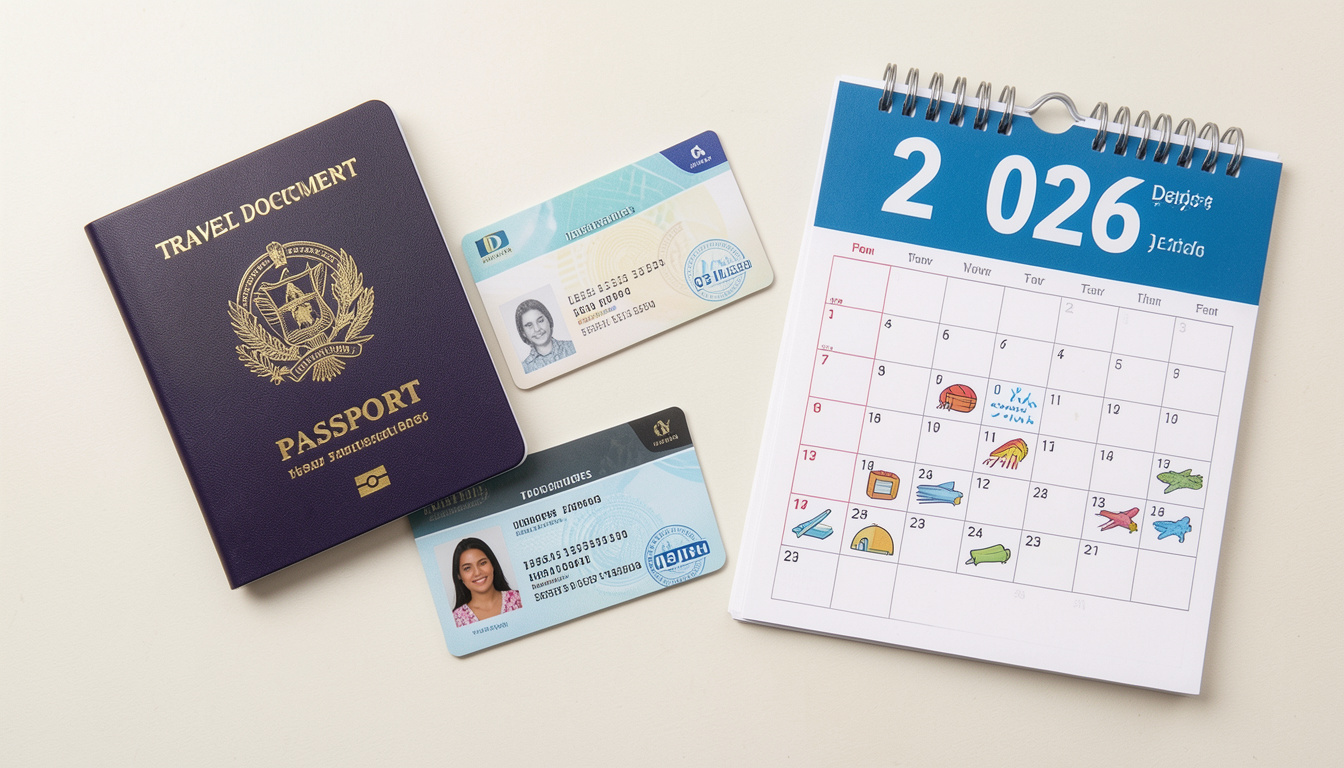
If you’re planning to fly within the United States or visit certain federal buildings, understanding REAL ID requirements is more important than ever. Millions of Americans have already upgraded their driver’s licenses, while many others are still unsure whether they need a REAL ID or what documents are required.
The process is straightforward once you know what to bring. However, missing even one required document can delay your application and require another trip to the DMV. This guide explains everything in simple language.from eligibility and required paperwork to application steps and common mistakes.
Whether you’re applying for your first REAL ID or replacing an older driver’s license, this complete guide will help you prepare with confidence.
What Is a REAL ID?
A REAL ID is a state-issued driver’s license or identification card that meets federal security standards established by the REAL ID Act.
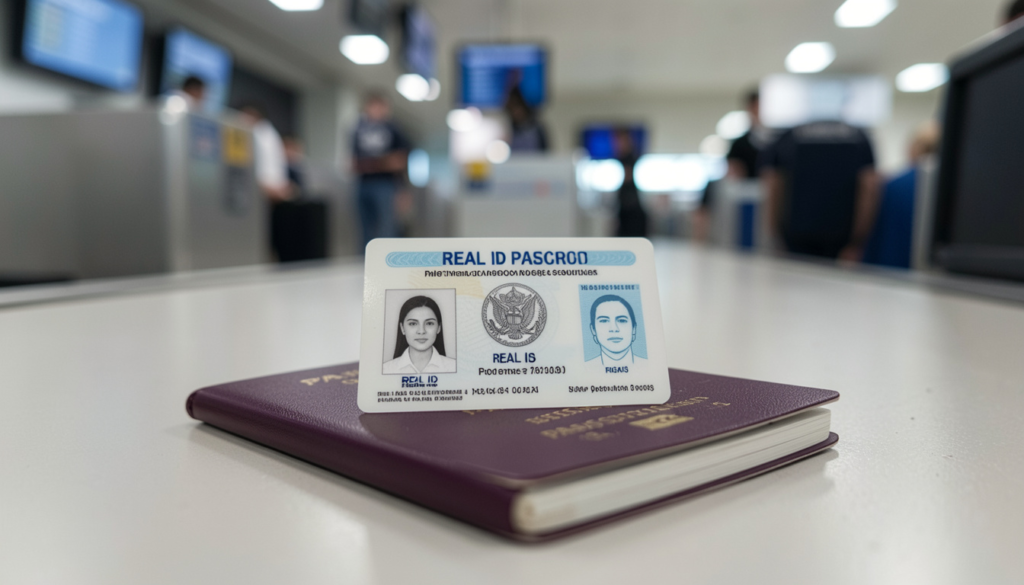
Although it looks similar to a regular driver’s license, a REAL ID includes enhanced security features and is accepted by federal agencies for official purposes. Most REAL ID cards display a star in the upper-right corner, making them easy to identify.
Beginning with federal enforcement, travelers generally need a REAL ID-compliant driver’s license or another approved form of identification—such as a passport—to board domestic commercial flights and access certain federal facilities.
Unlike a passport, a REAL ID is intended mainly for domestic identification. It cannot be used for international travel.
Key Features of a REAL ID
| Feature | REAL ID |
| State-issued | ✅ Yes |
| TSA-approved for domestic flights | ✅ Yes |
| Meets federal security standards | ✅ Yes |
| Can replace passport for international travel | ❌ No |
| Used for federal facilities | ✅ Yes (where required) |
Why Was the REAL ID Act Created?
The REAL ID Act was passed to improve the security of identification documents across the United States.
Before the law, each state followed different standards for issuing driver’s licenses. This made it easier for fraudulent IDs to be created and used.
The Act introduced nationwide security requirements that states must follow when issuing identification cards and driver’s licenses. These standards help verify identity, reduce fraud, and improve national security.
Today, every state and U.S. territory issues REAL ID-compliant cards.
How Can You Tell If You Already Have a REAL ID?
Many people already have one without realizing it.
Check the upper-right corner of your driver’s license or state ID.
Look for a symbol such as:
- ⭐ Gold Star
- ⭐ Black Star
- ⭐ White Star inside a circle
The exact design depends on your state, but the presence of the star usually indicates that your license is REAL ID compliant.
If your license says “Not for Federal Identification,” “Federal Limits Apply,” or similar wording, it is generally not a REAL ID.
REAL ID Requirements Explained
Understanding the REAL ID requirements before visiting your DMV can save you time and frustration.
Although each state manages its own licensing system, the federal government sets the minimum documentation standards.
In most cases, you’ll need documents from four categories:
- Proof of identity
- Proof of legal presence
- Proof of Social Security number
- Two proofs of residency
Let’s look at each one in detail.
1. Proof of Identity
The first requirement is proving who you are.
Most applicants use one of these documents:
- Valid U.S. passport
- Certified U.S. birth certificate
- Permanent Resident Card
- Employment Authorization Document
- Foreign passport with approved immigration documents
- Certificate of Naturalization
- Certificate of Citizenship
Your document must be original or a certified copy. Photocopies are generally not accepted.
2. Proof of Social Security Number
Applicants must also verify their Social Security number.
Common acceptable documents include:
- Social Security card
- W-2 form
- SSA-1099
- Non-SSA 1099
- Recent pay stub showing your complete SSN
Your name on the document should match your identity documents.
3. Proof of Legal Presence
Applicants must show they are legally authorized to be in the United States.
Acceptable documents may include:
- U.S. passport
- Birth certificate
- Permanent Resident Card
- Valid immigration documents
- Naturalization certificate
- Citizenship certificate
If your immigration status has recently changed, additional verification may be required.
4. Proof of Residency
Most states require two separate documents showing your residential address.
Examples include:
- Utility bill
- Mortgage statement
- Lease agreement
- Bank statement
- Credit card statement
- Vehicle registration
- Insurance policy
- Property tax bill
- Official government mail
The address on both documents should match your application.
Documents You Need for a REAL ID
One of the most common reasons applications are delayed is incomplete paperwork.
Before heading to the DMV, gather every required document and organize them in a folder.
REAL ID Document Checklist
| Requirement | Examples |
| Proof of Identity | Passport, Birth Certificate |
| Social Security | SSN Card, W-2 |
| Legal Presence | Passport, Green Card |
| Residency #1 | Utility Bill |
| Residency #2 | Bank Statement |
Bringing extra documents can also help if the DMV requests additional verification.
What If Your Name Has Changed?

Many applicants have legally changed their names after marriage, divorce, or a court order.
In this situation, you’ll need documents linking your previous and current names.
Examples include:
- Marriage certificate
- Divorce decree
- Court-issued name change order
- Adoption records (if applicable)
Every document should create a clear legal chain from your birth name to your current legal name.
Original Documents vs Copies
One mistake many people make is bringing photocopies.
For most REAL ID applications, DMVs require:
✅ Original documents
or
✅ Certified copies issued by the appropriate government agency.
Documents that are laminated, altered, or damaged may not be accepted.
Can Digital Documents Be Used?
Some states now accept certain electronic records for specific proofs, but many still require paper originals or certified copies.
Before your appointment, check your state’s DMV website to confirm which digital documents, if any, are accepted.
Tips Before Visiting the DMV
Preparing ahead can make your appointment much smoother.
- Double-check your state’s required documents.
- Make a DMV appointment if available.
- Bring more documents than the minimum requirement.
- Ensure names and addresses match across your paperwork.
- Carry original or certified copies.
- Verify that expired documents are still acceptable before your visit.
A little preparation can save hours of waiting and prevent multiple trips.
Why Being Prepared Matters
Applying for a REAL ID is usually a one-time process, but missing documents can delay approval and create unnecessary stress. By understanding the REAL ID requirements and organizing your paperwork in advance, you can complete your application quickly and confidently.
In the next section, we’ll cover who actually needs a REAL ID, who is exempt, how it compares with a standard driver’s license and a passport, and the exact step-by-step application process, along with helpful comparison tables.
Who Needs a REAL ID?
Not everyone is required to get a REAL ID, but many people will benefit from having one—especially if they travel within the United States.
If you plan to board domestic commercial flights using your driver’s license or state ID, having a REAL ID makes the security process much easier. It is also useful for entering certain federal buildings and military bases where federally accepted identification is required.
You Should Get a REAL ID If You:
- You fly within the United States using your driver’s license.
- You visit military installations.
- You enter federal government facilities that require compliant identification.
- You want one ID that meets federal identification standards.
- You prefer not to carry your passport for domestic travel.
For many Americans, upgrading to a REAL ID is a convenient way to avoid carrying additional identification during domestic trips.
Who Doesn’t Need a REAL ID?
Although REAL IDs are recommended, they are not mandatory for everyone.
If you already carry another federally accepted form of identification, you may not need one.
You may not need a REAL ID if you:
- Use a valid U.S. passport for domestic flights.
- Have a U.S. Passport Card.
- Carry a DHS Trusted Traveler card (such as Global Entry).
- Use a military ID.
- Have another TSA-approved identification document.
Children under 18 traveling with an adult on domestic flights generally do not need their own REAL ID, though airlines may have their own identification policies.
REAL ID vs Standard Driver’s License
Many people wonder whether a REAL ID is different from a regular driver’s license.
While both allow you to drive legally, only a REAL ID meets federal security requirements.
| Feature | REAL ID | Standard License |
| Legal to drive | ✅ Yes | ✅ Yes |
| Domestic flights | ✅ Yes | ❌ No (unless another approved ID is used) |
| Federal facilities | ✅ Yes | Limited |
| Proof of identity | Stronger verification | Standard state requirements |
| Star symbol | ✅ Yes | ❌ No |
Which One Should You Choose?
If you rarely travel and already own a passport, a standard license may still meet your driving needs.
However, if you travel even once or twice a year within the U.S., a REAL ID offers greater convenience.
REAL ID vs Passport
People often confuse these two documents because both verify your identity.
However, they serve different purposes.
| Feature | REAL ID | Passport |
| Domestic flights | ✅ Yes | ✅ Yes |
| International travel | ❌ No | ✅ Yes |
| Driver’s license | ✅ Yes | ❌ No |
| Federal facilities | ✅ Yes | ✅ Yes |
| Accepted nationwide | ✅ Yes | ✅ Yes |
Which Is Better?
The answer depends on your travel plans.
Choose a REAL ID if you mainly travel within the United States.
Choose a passport if you travel internationally.
Many travelers keep both because they serve different purposes.
Is a REAL ID Required for Domestic Flights?
Yes, if you’re using your driver’s license as identification.
Once federal enforcement is in effect, travelers must present either:
- A REAL ID-compliant driver’s license
- A valid U.S. passport
- Another TSA-approved identification document
Without one of these, you may not be allowed through airport security.
If you already travel with your passport, you can continue using it instead of obtaining a REAL ID.
Can You Fly Without a REAL ID?
Possibly—but only if you have another accepted form of identification.
Examples include:
- U.S. Passport
- Passport Card
- Military ID
- Permanent Resident Card
- Trusted Traveler Cards
- Other TSA-approved IDs
If you have none of these, upgrading to a REAL ID is strongly recommended before your next flight.
State-Specific REAL ID Requirements
Although the federal government establishes minimum standards, every state manages its own licensing process.
Because of this, requirements may vary slightly.
Differences may include:
- Appointment availability
- Application fees
- Accepted residency documents
- Processing time
- Online pre-application options
- Renewal procedures
Always review your state’s DMV requirements before visiting an office.
How to Apply for a REAL ID
Applying is usually straightforward when you have the correct documents.
Step 1: Gather Required Documents
Prepare:
- Proof of identity
- Social Security document
- Two residency documents
- Proof of legal presence (if required)
Organize everything before leaving home.
Step 2: Complete the Application
Many states allow applicants to:
- Fill out forms online
- Upload some documents
- Schedule appointments
- Save time before visiting the DMV
Completing paperwork in advance can reduce wait times.
Step 3: Visit Your DMV
Bring all original or certified documents.
A DMV representative will:
- Verify your paperwork
- Confirm your identity
- Take your photograph
- Collect your signature
- Process your application
Some states also require a vision screening if you’re renewing your driver’s license at the same time.
Step 4: Pay the Required Fee
Application fees differ by state.
Some states charge the same fee as a driver’s license renewal, while others add a small upgrade fee.
Payment methods usually include:
- Credit card
- Debit card
- Cash
- Check (varies by location)
Step 5: Receive Your REAL ID
Most DMVs issue a temporary paper license immediately.
Your permanent REAL ID card is typically mailed to your address within a few weeks.
Processing times vary depending on the state and application volume.
How Long Does It Take to Get a REAL ID?
The in-office appointment often takes 20–60 minutes, depending on wait times and whether you have all the required documents.
After your visit, the physical card is usually mailed within 1–4 weeks, though timing varies by state.
If you have an upcoming trip, apply well in advance to avoid last-minute stress.
How Much Does a REAL ID Cost?
The cost depends on your state and whether you’re:
- Applying for the first time
- Renewing your driver’s license
- Replacing a lost card
- Upgrading from a standard license
In many states, the fee is similar to the cost of renewing a regular driver’s license.
Typical Cost Comparison
| Service | Estimated Cost |
| First-time REAL ID | Varies by state |
| License renewal with REAL ID | Usually same as renewal fee |
| Replacement REAL ID | Small replacement fee |
| State ID REAL ID | Varies |
Check your state’s DMV website for the exact fee schedule.
Can You Renew a REAL ID Online?
This depends on your state’s rules.
Some states allow eligible residents to renew online if:
- Their information hasn’t changed.
- They already hold a REAL ID.
- They meet renewal eligibility requirements.
Others require an in-person visit, especially if documents must be reverified.
What Happens If Your REAL ID Is Lost or Stolen?

If your card is lost, stolen, or damaged:
- Report it if required by your state.
- Request a replacement through your DMV.
- Pay the replacement fee.
- Verify your identity if requested.
Some states allow online replacement requests, while others require an office visit.
Special Situations
Certain applicants may need additional documentation.
College Students
Students living away from home may need documents showing their current residential address or follow their state’s residency rules.
Married Applicants
If your current legal name differs from your birth certificate, bring certified marriage certificates or court documents that establish the legal name change.
Recently Moved?
Update your address before applying if your state requires current residency records.
Using outdated documents is one of the most common reasons applications are delayed.
REAL ID Application Checklist
Use this checklist before heading to your local DMV. Having every required document ready can save you time and prevent a second trip.
| ✔ Task | Status |
| Confirm your state’s REAL ID requirements | ☐ |
| Gather proof of identity | ☐ |
| Gather proof of Social Security number | ☐ |
| Gather two proofs of residency | ☐ |
| Bring legal name change documents (if applicable) | ☐ |
| Check document expiration dates | ☐ |
| Make a DMV appointment (if available) | ☐ |
| Complete any online application forms | ☐ |
| Bring payment for application fees | ☐ |
| Double-check that all names and addresses match | ☐ |
Common Mistakes to Avoid
Many REAL ID applications are delayed because of simple mistakes. Avoid these common errors to make the process smoother.
1. Bringing Photocopies Instead of Originals
Most DMVs require original documents or certified copies. Regular photocopies are usually not accepted.
Tip: Place all original documents in a folder before your appointment.
2. Bringing Only One Proof of Address
Many applicants forget that two separate residency documents are required.
Examples include:
- Utility bill
- Bank statement
- Mortgage statement
- Lease agreement
3. Mismatched Names
Your birth certificate, Social Security card, and driver’s license should match.
If your name has changed because of marriage, divorce, or a court order, bring the appropriate legal documents.
4. Waiting Until the Last Minute
DMVs can become very busy during travel seasons.
Applying several weeks before an upcoming trip gives you enough time to receive your card.
5. Forgetting to Check State Rules
Although the REAL ID Act sets federal standards, each state may have different application procedures or accepted documents.
Always verify your state’s current requirements before visiting the DMV.
Expert Tips
These practical tips can help you complete your REAL ID application quickly and avoid unnecessary delays.
Organize Documents in Advance
Place your identity, residency, and Social Security documents in one folder before leaving home.
Schedule an Appointment
Many DMV offices allow appointments, reducing long wait times.
Bring Extra Documents
Even if you think you have everything, bringing one or two extra residency documents can help if questions arise.
Review Your Application Carefully
Before submitting your paperwork, make sure your name, date of birth, and address are accurate.
Apply Before You Need It
Don’t wait until a week before your flight. Applying early gives you time to resolve any document issues.
Pros and Cons of a REAL ID
| Pros | Cons |
| Accepted for domestic flights | Cannot replace a passport for international travel |
| Meets federal security standards | Requires more documentation than a standard license |
| Convenient for airport travel | May require an in-person DMV visit |
| Accepted at many federal facilities | Processing time varies by state |
| Can replace carrying a passport for domestic travel | Some states charge additional fees |
Quick Answer
REAL ID requirements include providing proof of identity, your Social Security number, legal U.S. status, and two documents proving your state residency. A REAL ID is required for boarding domestic flights and entering certain federal facilities unless you use another approved form of identification, such as a valid U.S. passport.
FAQs
What documents are required for a REAL ID?
Most applicants need:
- Proof of identity
- Proof of Social Security number
- Two proofs of residency
- Proof of lawful presence, if applicable
Can I fly without a REAL ID?
Yes, if you have another TSA-approved identification, such as a valid U.S. passport or military ID.
Is a REAL ID mandatory?
No. However, you’ll need either a REAL ID or another federally accepted form of identification for certain federal purposes, including boarding domestic commercial flights.
How long does it take to receive a REAL ID?
Most people receive their card within 1–4 weeks, although processing times vary by state.
Does a REAL ID replace a passport?
No.
A REAL ID cannot be used for international travel.
Can I apply online?
Some states allow part of the application process online, but many applicants still need to visit a DMV office in person.
Is a REAL ID more secure than a standard driver’s license?
Yes.
REAL IDs follow enhanced federal security standards for identity verification.
How much does a REAL ID cost?
The cost varies by state. In many states, it is similar to the fee for renewing a standard driver’s license.
Can I use a REAL ID to enter federal buildings?
Yes, many federal facilities that require identification accept a REAL ID-compliant license or ID card.
Do children need a REAL ID?
Generally, children under 18 do not need a REAL ID when traveling domestically with an accompanying adult, though airline policies may vary.
Conclusion
Understanding the REAL ID requirements is one of the easiest ways to prepare for future travel within the United States. While the application process requires a few important documents, getting organized ahead of time can make your DMV visit quick and stress-free.
A REAL ID provides a convenient, federally compliant form of identification for boarding domestic flights and accessing certain federal facilities. By gathering your proof of identity, Social Security documentation, and residency records before your appointment, you can avoid common mistakes and complete your application with confidence.
As requirements and procedures may vary slightly by state, always verify the latest information with your state’s DMV before applying. Planning ahead ensures you’ll be ready for your next trip without unexpected delays.
If you found this guide helpful, explore our other travel resources for expert advice on airport security, travel planning, passport information, and smart travel tips to make every journey smoother.
Read More TSA PreCheck: The Ultimate 2026 Guide to Faster Airport Security, Costs, Benefits & How to Apply