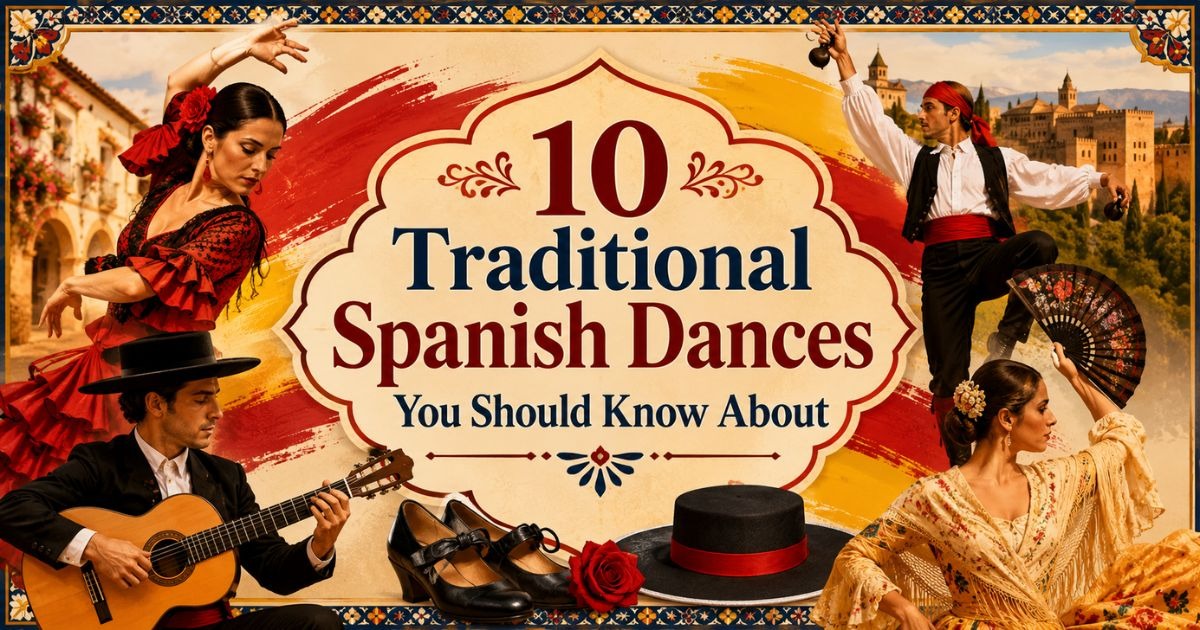
Spain is renowned for its vibrant culture, passionate music, and rich artistic traditions. Among the country’s most treasured cultural expressions are its Traditional Spanish Dances, which reflect centuries of history, regional identities, and social customs. From the fiery rhythms of Flamenco to the lively steps of regional folk dances, Spain’s dance heritage continues to captivate audiences worldwide.
Understanding Traditional Spanish Dances provides valuable insight into Spain’s diverse cultural landscape. Each dance tells a unique story about the region from which it originated, showcasing local music, costumes, and traditions. Whether performed at festivals, celebrations, or professional stages, these dances remain an essential part of Spanish identity and cultural pride.
Why Traditional Spanish Dances Are Important
Dance has long played a central role in Spanish society. Throughout history, communities have used dance to celebrate religious events, seasonal festivals, weddings, and social gatherings.
Cultural Significance of Spanish Dance
Traditional dances in Spain serve several purposes:
- Preserving regional identities
- Celebrating historical traditions
- Strengthening community bonds
- Passing cultural knowledge to younger generations
- Attracting cultural tourism
Key Characteristics of Traditional Spanish Dances
| Feature | Description |
| Music | Often includes guitars, drums, castanets, and vocals |
| Costumes | Colorful regional attire and traditional dresses |
| Rhythm | Complex footwork and expressive movements |
| Performance Style | Solo, paired, or group dances |
| Cultural Role | Celebrations, festivals, and ceremonies |
1. Flamenco
The Most Famous Traditional Spanish Dance
Flamenco is undoubtedly the most internationally recognized among all Traditional Spanish Dances. Originating in Andalusia, it combines singing, guitar playing, dancing, and rhythmic handclaps.
Characteristics of Flamenco
- Intense emotional expression
- Powerful foot stomping
- Dramatic arm movements
- Colorful costumes
- Improvisational elements
Cultural Importance
Flamenco represents centuries of cultural blending involving Andalusian, Romani, Moorish, and Jewish influences.
2. Sevillanas
The Dance of Seville
Sevillanas is a lively folk dance commonly performed during fairs and festivals, particularly in Seville.
Features of Sevillanas
- Performed in pairs
- Divided into four sections
- Accompanied by guitar and singing
- Graceful hand and arm movements
Popular Occasions
- Feria de Abril
- Local fiestas
- Weddings
- Cultural celebrations
3. Jota

Spain’s Energetic Folk Dance
The Jota originated in Aragón and has spread across many Spanish regions.
Unique Elements
- Fast-paced footwork
- Use of castanets
- Traditional regional costumes
- Energetic jumping movements
Regional Variations
Several versions exist throughout Spain:
- Aragonese Jota
- Castilian Jota
- Valencian Jota
- Navarrese Jota
4. Sardana
Symbol of Catalan Identity
The Sardana is closely associated with Catalonia and symbolizes unity and community spirit.
How It Is Performed
Participants form a circle while holding hands and perform synchronized steps.
Significance
The Sardana reflects:
- Social equality
- Community participation
- Regional pride
- Cultural preservation
5. Muneira
Galicia’s Traditional Dance
The Muñeira is one of Galicia’s most beloved dances and is strongly influenced by Celtic traditions.
Distinctive Features
- Quick rhythms
- Bagpipe accompaniment
- Circular formations
- Lively footwork
Musical Instruments
| Instrument | Role |
| Gaita (Bagpipe) | Main melody |
| Drum | Rhythm |
| Tambourine | Additional percussion |
6. Fandango
A Historic Spanish Courtship Dance
The Fandango became popular during the 18th century and remains one of the most influential Traditional Spanish Dances.
Characteristics
- Performed by couples
- Features castanets
- Alternates between slow and fast sections
- Expressive body movements
Legacy
Many later Spanish dance forms evolved from the Fandango.
7. Bolero
Elegant and Refined
The Spanish Bolero emerged in the late 18th century and became associated with theatrical performances.
Main Features
- Controlled movements
- Graceful turns
- Complex choreography
- Classical influence
Costumes
Dancers traditionally wear:
- Embroidered jackets
- Decorative skirts
- Traditional shoes
8. Zambra
The Moorish-Inspired Dance
The Zambra originated among the Romani communities of Granada and reflects strong Moorish influences.
Historical Background
The dance traces its roots to celebrations during Spain’s Islamic period.
Performance Characteristics
- Sensual movements
- Barefoot dancing
- Middle Eastern influences
- Expressive storytelling
9. Aurresku
The Ceremonial Dance of the Basque Country

Aurresku is an important ceremonial dance from the Basque region.
Traditional Purpose
Historically, it was performed to honor:
- Important guests
- Newlyweds
- Community leaders
- Religious figures
Key Features
- Solo male dancer
- Precise footwork
- Formal presentation
- Accompanied by traditional music
10. Chotis
Madrid’s Traditional Urban Dance
Although influenced by European dance styles, Chotis has become a beloved symbol of Madrid.
Dance Style
- Performed by couples
- Simple rotating movements
- Traditional Madrid costumes
- Popular during local festivals
Modern Popularity
Chotis remains a staple of Madrid’s annual celebrations and cultural events.
Comparison of Traditional Spanish Dances
| Dance | Region | Style | Performance Type |
| Flamenco | Andalusia | Passionate | Solo/Group |
| Sevillanas | Andalusia | Festive | Pairs |
| Jota | Aragón | Energetic | Solo/Pairs |
| Sardana | Catalonia | Communal | Group |
| Muñeira | Galicia | Celtic-Inspired | Group |
| Fandango | Various Regions | Courtship | Couples |
| Bolero | Nationwide | Elegant | Solo/Pairs |
| Zambra | Granada | Expressive | Solo |
| Aurresku | Basque Country | Ceremonial | Solo |
| Chotis | Madrid | Social | Couples |
Traditional Costumes Used in Spanish Dances
Traditional costumes vary by region but commonly include:
For Women
- Ruffled dresses
- Embroidered shawls
- Flowers in the hair
- Decorative fans
For Men
- Tailored jackets
- Wide-brimmed hats
- Waistcoats
- Traditional boots
Costumes enhance the visual appeal and cultural authenticity of performances.
The Role of Music in Traditional Spanish Dances

Music is inseparable from Traditional Spanish Dances.
Common instruments include:
- Spanish guitar
- Castanets
- Tambourines
- Drums
- Bagpipes
- Flutes
Music dictates the rhythm, mood, and storytelling elements of each dance.
Where to Experience Traditional Spanish Dances
Visitors to Spain can enjoy authentic performances at:
| Location | Dance Style |
| Seville | Flamenco, Sevillanas |
| Barcelona | Sardana |
| Santiago de Compostela | Muñeira |
| Madrid | Chotis |
| Granada | Zambra |
| Bilbao | Aurresku |
Many festivals offer opportunities to see these dances performed in their original cultural settings.
FAQs
What is the most famous among Traditional Spanish Dances?
Flamenco is the most famous of all Traditional Spanish Dances, known for its passionate movements, guitar music, and emotional performances.
Are Traditional Spanish Dances still performed today?
Yes, Traditional Spanish Dances remain an important part of festivals, cultural events, weddings, and professional performances throughout Spain.
Which Traditional Spanish Dance comes from Catalonia?
The Sardana is the most recognized Catalan dance and symbolizes community, unity, and regional pride.
What instruments are commonly used in Traditional Spanish Dances?
Common instruments include Spanish guitars, castanets, drums, tambourines, flutes, and bagpipes, depending on the region and dance style.
Where can tourists watch Traditional Spanish Dances in Spain?
Tourists can experience Traditional Spanish Dances in cities such as Seville, Madrid, Barcelona, Granada, Bilbao, and Santiago de Compostela, especially during local festivals and cultural events.
Conclusion
The rich world of Traditional Spanish Dances offers a fascinating glimpse into Spain’s cultural diversity, history, and artistic heritage. From the emotional intensity of Flamenco and the festive spirit of Sevillanas to the communal unity of Sardana and the Celtic influences of Muñeira, each dance reflects the unique traditions of its region.
Whether you are a traveler, culture enthusiast, or dance lover, exploring Traditional Spanish Dances provides a deeper appreciation of Spain’s vibrant identity. These dances continue to thrive today, preserving centuries-old customs while inspiring new generations around the world.
Read More:
10 Traditional Mexican Dances You Should Know About
Best & Worst Times to Visit Bali 2026 (First-Timer Guide)