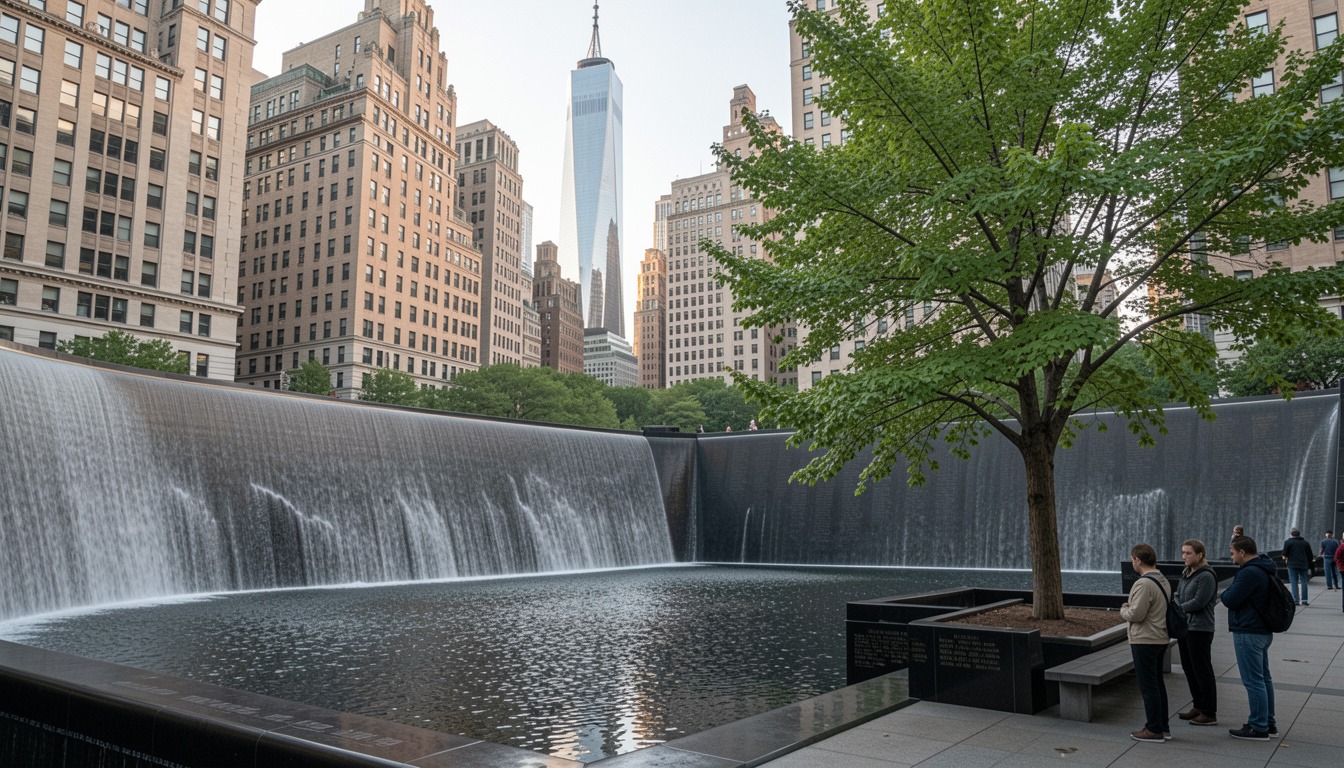
Visiting the 9/11 Memorial & Museum is unlike visiting most New York City attractions. This is not simply another stop on a sightseeing itinerary. It is a place of remembrance built at the former World Trade Center site, where visitors can reflect on the lives lost, learn about the events of September 11, 2001, and understand how those events changed New York, the United States, and the world.
The outdoor Memorial offers a quiet contrast to busy Lower Manhattan. Two enormous reflecting pools occupy the footprints of the former Twin Towers, while the names of the victims are inscribed around their edges. Beneath the plaza, the Museum uses artifacts, photographs, archival recordings, personal stories, and first-person testimony to tell a much larger story.
Whether you are visiting New York for the first time, traveling with family, or interested in American history, this guide explains what to expect, how to plan your visit, what you should not miss, and how to experience the site respectfully.
Quick Answer
Yes. The 9/11 Memorial & Museum is one of the most significant historical attractions in New York City. The outdoor Memorial is free and open daily, while the Museum requires a ticket and offers a deeper look at the September 11, 2001 attacks, the 1993 World Trade Center bombing, the victims, survivors, first responders, and the lasting impact of 9/11.
For most travelers, the best approach is to visit the Memorial first and then allow at least 45–90 minutes for the Museum. Because the subject matter is emotional, give yourself enough time to move slowly and take breaks.
Current basics:
| Detail | What to Know |
| Location | 180 Greenwich Street, Lower Manhattan |
| Memorial admission | Free |
| Memorial hours | Daily, 8 a.m.–8 p.m. |
| Museum hours | Generally Wednesday–Monday, 9 a.m.–7 p.m.; select Tuesdays may be available |
| Museum admission | Paid, timed tickets required |
| Recommended Museum time | At least 45–90 minutes |
| Best for | History, remembrance, education, architecture and meaningful NYC travel |
| Subway access | Multiple subway lines serve the World Trade Center and surrounding area |
| Accessibility | Accessible entrances, elevators, seating and assistive resources are available |
Hours and admission policies can change, so confirm the official schedule before your trip.
What Is the 9/11 Memorial & Museum?
The 9/11 Memorial & Museum is a memorial and historical institution located at the former World Trade Center complex in Lower Manhattan.
The outdoor Memorial honors the 2,977 people killed in the September 11, 2001 attacks at the World Trade Center, Pentagon, and near Shanksville, Pennsylvania. It also remembers the six people killed in the February 26, 1993 World Trade Center bombing.
The Museum sits beneath the Memorial plaza and tells the story of 9/11 through historical evidence and personal experiences. Its exhibits cover what happened on September 11, the events leading up to the attacks, the immediate aftermath, the recovery effort, and the continuing consequences.
Memorial vs. Museum: What’s the Difference?
| Feature | 9/11 Memorial | 9/11 Museum |
| Location | Outdoor plaza | Underground |
| Admission | Free | Paid ticket |
| Main purpose | Remembrance and reflection | History and education |
| Time needed | About 20–45 minutes | At least 45–90 minutes |
| Tickets | Not required | Advance timed ticket required |
| Main features | Two reflecting pools and victims’ names | Exhibitions, artifacts and personal stories |
A common mistake is thinking the Memorial and Museum are the same attraction. They are connected, but they offer very different experiences.
Why Is the 9/11 Memorial Important?
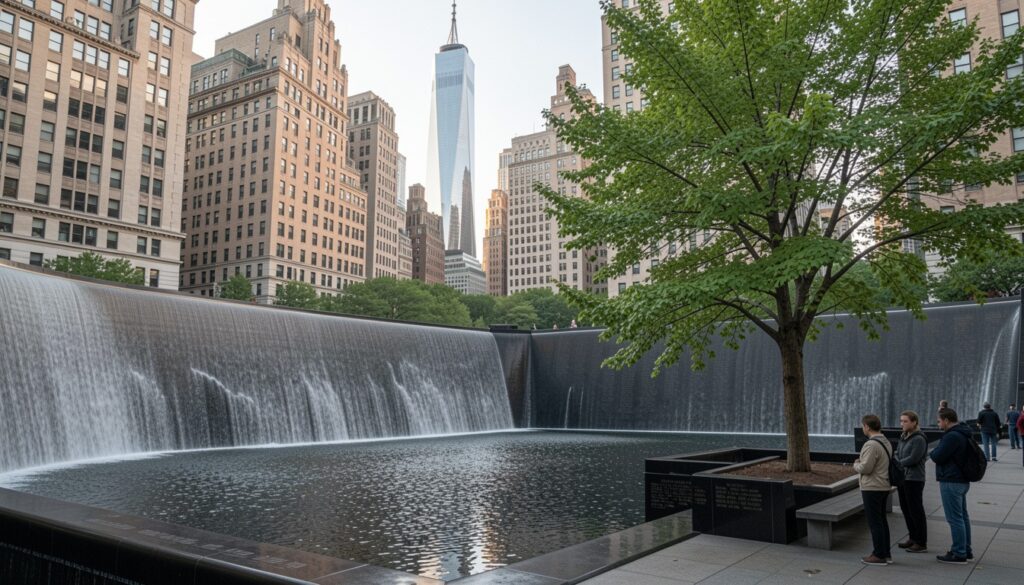
The Memorial was designed as a place where absence, loss, and remembrance could be experienced within the energy of modern New York City.
The two reflecting pools occupy the footprints of the former North and South Towers. Each pool is nearly an acre in size. Water flows down the walls into large square basins before disappearing into central voids. The design creates a powerful sense of movement while emphasizing the absence left by the towers.
The Memorial opened on September 11, 2011, marking the 10th anniversary of the attacks.
One of the most meaningful details is the arrangement of the victims’ names. The names are not presented as an anonymous list. Their placement follows relationships and categories connected with the events, creating a more personal representation of those who died.
What You Will See at the Memorial
Expect to see:
- Two enormous reflecting pools
- Waterfalls surrounding each pool
- Bronze panels containing victims’ names
- Hundreds of trees
- The Survivor Tree
- The surrounding World Trade Center complex
- A quiet space for reflection
The Memorial occupies roughly half of the original 16-acre World Trade Center site.
The Survivor Tree
The Survivor Tree is one of the most recognizable living symbols at the Memorial.
The tree survived the destruction of the World Trade Center site and was later nursed back to health before being returned to the Memorial grounds. Today, its growth represents resilience and renewal.
It is easy to walk past without realizing its history, so make a point of looking for it during your visit.
What Can You See Inside the 9/11 Museum?
The Museum is the deeper historical experience.
The facility covers approximately 110,000 square feet beneath the Memorial and uses the actual World Trade Center site as part of its architecture and storytelling.
Inside, visitors encounter artifacts, photographs, audio recordings, videos, personal testimony, historical documents, and objects connected with the attacks and recovery.
The Museum’s core exhibitions include:
September 11, 2001
This historical exhibition is organized into three broad sections:
The Events of the Day
Before 9/11
After 9/11
The exhibition places the attacks within historical context rather than presenting September 11 as an isolated event.
In Memoriam
The In Memoriam exhibition focuses on the individuals killed in the attacks.
It is one of the most personal sections of the Museum because it moves the experience away from buildings, aircraft, politics, and headlines and toward individual lives.
Visitors can learn about the people behind the names and see photographs and information that help tell their stories.
Authentic Artifacts
The collection contains tens of thousands of objects documenting 9/11, the 1993 bombing, the response, and the aftermath. The Museum currently reports more than 82,000 artifacts and digital materials in its collection.
Among the collection are large objects and everyday personal items. Their value comes not only from their physical condition but from the stories they preserve.
How Long Do You Need at the 9/11 Memorial & Museum?
A good rule is to allow two to three hours for the complete experience.
You can see the outdoor Memorial relatively quickly, but rushing through the Museum can make the visit less meaningful.
Suggested Itinerary
30 minutes:
Walk around the Memorial pools and read selected names.
90 minutes:
Explore the Museum’s main exhibitions.
30 minutes:
Allow extra time for personal reflection, additional displays, the Museum Store, or a short break.
Total: Around 2–3 hours.
The Museum itself recommends that visitors plan on spending at least 45–90 minutes inside.
If you are traveling with children, older adults, or anyone who may need frequent breaks, plan additional time.
Can You Visit Quickly?
Yes, but a rushed visit is not ideal.
If your New York itinerary is packed, you can visit the free Memorial without entering the Museum. However, if you have never visited before and want to understand the historical context, adding the Museum is worthwhile.
9/11 Memorial & Museum Tickets, Hours and Admission
Planning ahead is important.
The Memorial is free and open to the public seven days a week, currently from 8 a.m. to 8 p.m. The Museum requires advance admission and operates on a different schedule. The official site currently lists the Museum as generally open Wednesday through Monday, 9 a.m. to 7 p.m., with select Tuesdays.
Last admission is currently listed as 5:30 p.m. on the official accessibility page.
Should You Buy Tickets in Advance?
Yes.
Timed Museum tickets are required, and the Museum advises visitors to purchase them in advance. Tickets can currently be purchased up to six months ahead.
This is especially important during:
- Summer vacations
- School holidays
- Thanksgiving week
- Christmas and New Year’s travel
- Holiday weekends
- Anniversary periods
- Busy New York City travel seasons
Always check the official ticket calendar for the date and time you want.
Free and Discounted Admission
The Museum has several admission programs and special offers, including certain free-admission opportunities for eligible visitors. Current policies include free admission for children age six and under, free admission for active and retired U.S. military and veterans with valid ID, and special programs for New York-area residents and workers.
Because eligibility rules can change, verify current conditions before planning your budget.
How to Get to the 9/11 Memorial & Museum
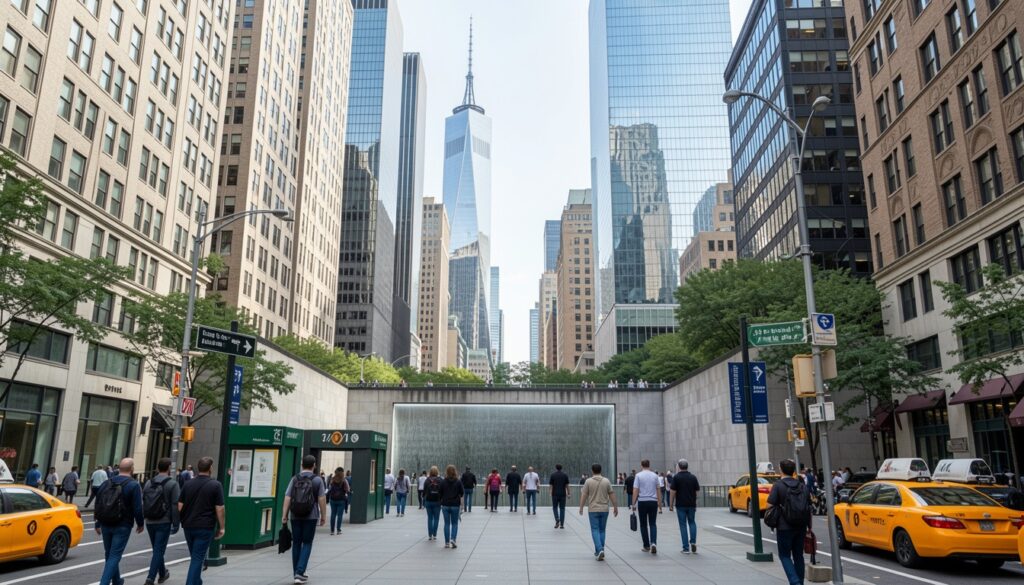
The attraction is at 180 Greenwich Street in Lower Manhattan. It is easy to reach using public transportation.
Several subway stations are within walking distance.
Nearby subway options include:
- A, C, 1, 2 and 3 at Chambers Street
- A, C, J, Z, 2, 3, 4 and 5 at Fulton Street
- 2 and 3 at Park Place
- E at World Trade Center
- R at Rector Street
- R at Cortlandt Street
- 1 at WTC Cortlandt
Exact service patterns can change, so check the MTA before traveling.
What Else Is Nearby?
The Memorial is in one of the most walkable sightseeing areas in Lower Manhattan.
You can combine your visit with:
- One World Observatory
- Oculus
- World Trade Center complex
- Battery Park
- Wall Street
- Federal Hall
- Trinity Church
- Statue of Liberty ferry departures
- Brooklyn Bridge
A Smart Lower Manhattan Walking Route
A convenient day could look like:
Morning:
Statue of Liberty or Battery Park
Late morning:
Wall Street and Federal Hall
Early afternoon:
9/11 Memorial & Museum
Late afternoon:
Oculus and One World Trade Center
Evening:
Brooklyn Bridge or dinner in Lower Manhattan
This approach saves travel time because the attractions are relatively close together.
Is the 9/11 Memorial & Museum Suitable for Children?
Yes, but parents should consider the age and sensitivity of each child.
The Museum deals with a traumatic historical event. Some exhibits include disturbing photographs, emergency recordings, and emotionally difficult stories.
For older children and teenagers, the Museum can provide an important history lesson. Younger children may find parts of the experience confusing or upsetting.
Tips for Families
Before visiting:
- Explain in simple terms why the Museum exists.
- Tell children that some exhibits may be difficult.
- Give them permission to ask questions.
- Do not force a child to view an exhibit.
- Take breaks when needed.
- Consider visiting the outdoor Memorial separately if the Museum feels overwhelming.
There is no single “right” age for the Museum. Parents know their children’s emotional maturity best.
Is It Appropriate for School-Age Students?
It can be.
The Museum has educational resources and programs designed for students and teachers, making it more than a tourist attraction. Its exhibits connect historical events with individual stories, primary evidence, and broader consequences.
Accessibility at the 9/11 Memorial & Museum

The 9/11 Memorial & Museum provides a range of accessibility resources.
The Museum has accessible entrances, elevators and accessible public areas. Manual wheelchairs and wheeled walkers are available on a first-come, first-served basis, while seating is available at several locations throughout the Museum.
Additional resources include:
- Accessible restrooms
- Elevator access
- Wheelchair-accessible exhibition areas
- Assistive listening systems
- Open captions and transcripts
- Audio descriptions
- American Sign Language resources
- Service-animal access
Museum audio guides are available in multiple languages, including ASL.
A Useful Tip
If you have specific accessibility needs, contact the Museum before your visit rather than waiting until arrival. This is particularly useful if you need a reserved wheelchair or specialized tour assistance.
What Should You Wear and Bring?
There is no special dress code, but comfortable clothing and shoes are a good idea.
The Museum is indoors and climate-controlled, while the Memorial is outdoors.
Bring
- Comfortable walking shoes
- A light jacket
- Your ticket confirmation
- Identification if using an eligible discount
- A phone with enough battery
- Water for before or after your Museum visit
- Any necessary accessibility equipment
The Museum notes that its indoor temperature is generally between 68 and 72°F, so a light layer can be useful.
Don’t Bring Oversized Bags
Security screening is required, and certain items are prohibited.
The Memorial’s visitor guidelines state that bags larger than 19 × 17 × 8 inches are not permitted onto the Memorial. Other prohibited items include weapons, alcohol, smoking materials, outside food and drinks, and recreational wheeled vehicles, among others.
Travel light whenever possible.
Respectful Photography and Visitor Etiquette
The 9/11 Memorial & Museum is a place of remembrance.
Photography at the outdoor Memorial is common, but visitors should avoid treating the site like a conventional tourist backdrop.
Good Etiquette
- Keep your voice low.
- Do not climb on Memorial structures.
- Avoid blocking the names.
- Do not pose disrespectfully near the pools.
- Follow staff instructions.
- Be mindful of people who may have a personal connection to 9/11.
- Give other visitors space to reflect.
The Museum specifically asks visitors to treat the Memorial and Museum as sites of quiet reflection and remembrance.
A respectful visit does not mean you cannot take photographs. It means understanding where you are and why the place matters.
Pros and Cons of Visiting
| Pros | Cons |
| Powerful historical experience | Emotionally difficult for some visitors |
| Memorial is free | Museum admission costs extra |
| Easy Lower Manhattan location | Museum can become crowded |
| Extensive historical collection | Timed entry requires planning |
| Excellent educational value | Not ideal for a rushed itinerary |
| Accessible facilities | Some exhibits may be difficult for children |
| Can combine with nearby attractions | Security screening takes additional time |
Who Should Visit?
The Museum is particularly valuable for:
- First-time visitors to New York
- History travelers
- Families with older children
- Students
- International visitors learning about U.S. history
- Architecture enthusiasts
- Travelers interested in modern American history
If you are only looking for entertainment, this may not be the right attraction. If you want a meaningful understanding of an event that shaped modern history, it is difficult to overlook.
Expert Tips for a Better Visit
Visit the Memorial Before the Museum
Start outside.
Seeing the reflecting pools and names first gives you a physical sense of the site before you enter the historical exhibitions.
Reserve a Timed Museum Ticket
Do not build your entire itinerary around buying a ticket at the last minute. Advance reservations are recommended and required for Museum entry.
Allow More Time Than You Think
The official recommendation is at least 45–90 minutes, but history lovers can easily spend longer.
Don’t Schedule Something Immediately Afterward
The experience can be emotionally intense. Leave some breathing room in your itinerary.
Wear Comfortable Shoes
Lower Manhattan is highly walkable, and you may combine the Memorial with several nearby attractions.
Visit Earlier in the Day
Earlier visits can make it easier to manage your schedule and leave time for other Lower Manhattan attractions.
Read the Names
You do not have to read every name. Instead, pause at the names that catch your attention and remember that each represents a person with a life, family, friends, and community.
Use the Available Audio Resources
Audio guides can add context and provide another way to understand the exhibitions. The Museum currently offers audio-guide options in nine languages, including ASL.
Check the Official Schedule Before Leaving
Hours, exhibitions, ticket availability, and temporary closures can change.
Treat the Visit as More Than Sightseeing
The best experience comes from slowing down and paying attention.
Common Mistakes to Avoid

Assuming the Museum Is Free
The outdoor Memorial is free, but the Museum requires admission.
Arriving Without Checking Hours
The Memorial and Museum have different operating schedules.
Packing a Large Bag
Security rules restrict oversized baggage, so travel light.
Planning Only 20 Minutes
A quick walk around the Memorial is possible, but it does not give you enough time for the Museum.
Treating the Memorial Like a Photo Prop
Remember that this is an active place of remembrance.
Overloading Your Schedule
Pairing the Museum with several attractions can work, but give yourself enough time to process the experience.
Ignoring Accessibility Needs Until Arrival
Review accessibility information before your trip and contact the Museum if you need special assistance.
9/11 Memorial & Museum Visit Checklist
Use this checklist before leaving your hotel:
- Check Museum opening hours
- Reserve a timed Museum ticket
- Confirm the exact entry time
- Check subway service
- Wear comfortable shoes
- Bring a light jacket
- Carry a small bag
- Review visitor guidelines
- Allow at least 2 hours for the overall experience
- Plan a quiet break afterward
- Check accessibility services if needed
- Download or prepare any desired audio resources
- Combine nearby attractions carefully
- Check the official website again before visiting
Is the 9/11 Memorial & Museum Worth It?

For most travelers, yes.
The Memorial alone provides a meaningful and free experience. The Museum adds historical depth by placing the attacks within a broader timeline and focusing on the people, evidence, response, and aftermath.
What makes the 9/11 Memorial & Museum especially important is its combination of place and history. You are not simply looking at objects behind glass. You are standing at the site where many of the events occurred, while the Museum preserves physical evidence and personal stories connected to that history.
That makes the experience different from reading about 9/11 in a book or watching a documentary.
It is also worth remembering that the Museum is not only about the morning of September 11. Its exhibitions examine the historical context before the attacks and the consequences that followed.
For visitors who want to understand modern New York and modern American history, that broader perspective is one of the Museum’s greatest strengths.
Frequently Asked Questions
Is the 9/11 Memorial free to visit?
Yes. The outdoor 9/11 Memorial is free and open to the public daily. The Museum is a separate experience that requires a ticket.
How long should I spend at the 9/11 Memorial & Museum?
Plan for around 2–3 hours if you want to see both the Memorial and Museum without rushing. The Museum recommends at least 45–90 minutes inside.
Do I need tickets for the 9/11 Museum?
Yes. Museum admission requires a valid timed ticket, and advance reservations are recommended.
What are the 9/11 Memorial & Museum hours?
The Memorial is currently open daily from 8 a.m. to 8 p.m. The Museum is generally open Wednesday through Monday from 9 a.m. to 7 p.m., with select Tuesdays. Schedules can change, so check before visiting.
Can children visit the 9/11 Museum?
Yes, children can visit. However, parents should consider whether the historical material and emotional content are appropriate for their child’s age and maturity.
Where is the 9/11 Memorial & Museum located?
It is located at 180 Greenwich Street in Lower Manhattan, at the former World Trade Center site.
What is inside the 9/11 Museum?
The Museum contains historical exhibitions, artifacts, photographs, archival recordings, first-person testimony, and personal stories about 9/11, the 1993 World Trade Center bombing, the response, and the aftermath.
Is the 9/11 Museum wheelchair accessible?
Yes. The Museum provides accessible entrances, elevators, accessible public areas, seating, accessible restrooms, and several assistive resources.
Can I take photos at the 9/11 Memorial?
Visitors commonly photograph the outdoor Memorial, but photographs should always be taken respectfully. The site asks visitors to treat the Memorial and Museum as places of remembrance and quiet reflection.
What else can I visit near the 9/11 Memorial?
The Memorial is close to One World Trade Center, the Oculus, Wall Street, Battery Park, Federal Hall, Trinity Church, and other Lower Manhattan attractions.
Conclusion
A visit to the 9/11 Memorial & Museum is more than another stop on a New York City sightseeing itinerary. It is an opportunity to remember the people who lost their lives, learn about one of the most important events in modern American history, and understand how September 11 changed New York and the world.
Take your time exploring the Memorial, reading the names, and experiencing the Museum’s powerful exhibits. If you are planning your trip, book your Museum ticket in advance, wear comfortable shoes, and leave enough time for the experience rather than trying to fit it into a rushed schedule.
Whether you are visiting New York for the first time or returning to the city, the 9/11 Memorial & Museum offers a meaningful experience that can stay with you long after you leave. Plan your visit, learn the stories, and take a moment to remember the lives behind the history.
Read More:Oculus Transportation Hub: Complete 2026 Guide to NYC’s Iconic Transit Center