A great American road trip is about more than getting from Point A to Point B. The open highway gives you the freedom to stop at a roadside attraction, explore a national park, discover a small town, or change your plans when you find something interesting. But that freedom works best when you have a smart plan behind it.
That’s where a road trip planner becomes useful. With the right planning system, you can map your route, control your travel budget, choose comfortable overnight stops, and make sure you have enough time to actually enjoy each destination. A few hours of planning before departure can prevent many common problems on the road.
From California’s Pacific Coast Highway to the Blue Ridge Parkway, Route 66, Utah’s national parks, and New England’s scenic roads, the United States offers countless road trip possibilities. This guide explains how to plan one step by step, with practical tips for routes, costs, packing, safety, stops, accommodation, and more.
Quick Answer
A road trip planner is a tool, method, or planning system that helps you organize a driving vacation from start to finish. It can help you choose a route, estimate driving time, find attractions, calculate fuel costs, select hotels, plan food stops, and build a realistic daily itinerary.
For a USA road trip, the best approach is to combine a digital map with a simple itinerary, realistic driving limits, a flexible budget, and backup plans. Instead of planning every minute, focus on the major route, overnight stops, must-see attractions, and enough free time for unexpected discoveries.
Whether you’re planning a weekend getaway or a cross-country adventure, a good road trip plan can save time, reduce stress, and help you enjoy the journey—not just the destination.
25 Smart Ways to Use a Road Trip Planner

Choose Your Main Road Trip Goal
Start by deciding what you want from your trip.
Do you want:
- Scenic mountain drives?
- National parks?
- Beaches?
- Big cities?
- Historic towns?
- Food experiences?
- Outdoor adventures?
- Family-friendly attractions?
- A relaxing weekend getaway?
Your answer will influence almost every other decision.
For example, a traveler interested in national parks may enjoy a Utah road trip through Zion, Bryce Canyon, Capitol Reef, Arches, and Canyonlands. Someone looking for coastal scenery might prefer California’s Highway 1.
Expert tip: Pick three to five major experiences that matter most. Don’t try to see everything.
Pick the Right Road Trip Route
Your route determines your driving time, fuel costs, stops, and overall experience.
A good route should connect destinations logically instead of forcing you to make unnecessary backtracking drives.
For example:
Weak plan:
Los Angeles → Las Vegas → San Diego → Grand Canyon → Los Angeles
More efficient plan:
Los Angeles → Las Vegas → Grand Canyon → San Diego → Los Angeles
The second option can create a more logical loop depending on your exact destinations and available time.
When using a road trip route planner, look for:
- Total mileage
- Estimated driving time
- Road conditions
- Scenic roads
- Toll roads
- Seasonal closures
- Rest stops
- Fuel availability
Set a Realistic Daily Driving Limit
One of the biggest road trip planning mistakes is trying to drive too far every day.
Driving 8–10 hours may look manageable on a map, but traffic, meals, fuel stops, construction, sightseeing, and breaks can add significant time.
A better strategy is to build your schedule around your energy level.
For many travelers, approximately 4–6 hours of driving on sightseeing days can leave more time for exploration. Longer driving days may be reasonable when you’re simply moving between major destinations.
Remember:
Your road trip should include time to experience places, not just time behind the wheel.
Create a Road Trip Budget
A road trip budget should include more than gasoline.
Consider these expenses:
| Expense | What to Include |
| Fuel | Gasoline or charging costs |
| Accommodation | Hotels, motels, cabins, campgrounds |
| Food | Restaurants, groceries, snacks |
| Attractions | Museums, parks, tours, activities |
| Parking | City parking and attraction lots |
| Tolls | Highways and bridges |
| Vehicle costs | Rental, maintenance, insurance |
| Emergency fund | Unexpected expenses |
| Shopping | Souvenirs and personal purchases |
A useful formula is:
Estimated Trip Cost = Fuel + Accommodation + Food + Attractions + Parking/Tolls + Emergency Fund
Keep a buffer because real road trips rarely follow the original budget perfectly.
Calculate Fuel Costs Before Leaving
Fuel can become one of the largest expenses on a long American road trip.
To estimate fuel costs:
Fuel Used = Total Miles ÷ Vehicle MPG
Then:
Fuel Cost = Fuel Used × Average Price Per Gallon
For example, if your trip is 2,000 miles and your vehicle averages 30 MPG:
2,000 ÷ 30 = about 66.7 gallons.
You can then multiply that amount by your estimated average fuel price.
Prices vary by state and can change during your trip, so treat your estimate as a planning figure rather than an exact amount.
Plan Your Overnight Stops
Don’t choose overnight locations based only on the cheapest hotel.
Think about where you’ll be the next morning.
A strategically placed hotel can:
- Reduce the next day’s driving
- Put you closer to an attraction
- Give you more sightseeing time
- Make early starts easier
- Reduce unnecessary backtracking
For a national park trip, staying near the park entrance can sometimes be more convenient than choosing a cheaper hotel much farther away.
Build Your Itinerary Around Experiences
Instead of creating a schedule that looks like this:
8:00 — Drive
10:00 — Stop
11:00 — Drive
1:00 — Lunch
2:00 — Drive
4:00 — Attraction
Try building your itinerary around experiences:
Morning: Scenic drive
Midday: Local lunch
Afternoon: Main attraction
Evening: Relaxed dinner and overnight stay
This approach creates flexibility.
A road trip planner should give you structure without making the journey feel like a race.
Add Scenic Stops to Your Route
Some of the best road trip memories happen between major destinations.
Look for:
- Scenic overlooks
- Historic bridges
- Small towns
- Local diners
- Waterfalls
- State parks
- Historic landmarks
- Farm stands
- Visitor centers
- Unique roadside attractions
Leave some space in your schedule for spontaneous discoveries.
A route with fewer attractions but more enjoyable stops can be better than an overloaded itinerary.
Plan National Park Visits Carefully
National parks are among the most popular road trip destinations in the USA.
Before visiting, check:
- Entrance requirements
- Reservations
- Parking rules
- Shuttle systems
- Trail conditions
- Seasonal closures
- Weather
- Camping availability
- Current park alerts
Don’t assume you can arrive and immediately find parking or access every attraction.
Your road trip itinerary should also allow extra time for traffic and park shuttles.
Use a Road Trip Planner for Food Stops
Food is part of the road trip experience.
Instead of relying entirely on fast food, research a few local options along your route.
Try mixing:
- Local diners
- Regional specialties
- Farmers markets
- Food halls
- Casual restaurants
- Grocery stores
- Picnic lunches
Keep simple snacks and water available in the vehicle, especially on long rural stretches.
Choose the Right Vehicle
The best vehicle depends on your trip.
| Vehicle Type | Best For | Considerations |
| Compact car | Couples and city trips | Efficient fuel use |
| Sedan | Long highway drives | Comfortable and economical |
| SUV | Families and outdoor trips | More cargo space |
| Minivan | Larger families | Excellent passenger space |
| Pickup truck | Outdoor gear | Useful cargo capacity |
| EV | Suitable charging routes | Requires charging planning |
Think about luggage, passengers, weather, road conditions, fuel economy, and comfort.
For long journeys, comfort can be just as important as fuel economy.
Create a Road Trip Packing Checklist
Before leaving, check the basics.
Road Trip Packing Checklist
- Driver’s license and important documents
- Vehicle registration and insurance information
- Phone and charging cables
- Portable power bank
- Navigation backup
- Water bottles
- Snacks
- Comfortable clothing
- Weather-appropriate layers
- Sunglasses
- Basic first-aid supplies
- Reusable bags
- Trash bags
- Emergency supplies
- Personal medications if applicable
- Travel reservations
- Offline maps
Pack according to your destination rather than assuming every road trip requires the same gear.
Check Your Vehicle Before Departure
A road trip puts more miles on your vehicle than normal.
Before leaving, check:
- Tire pressure
- Tire condition
- Engine oil
- Coolant
- Windshield washer fluid
- Lights
- Brakes
- Battery
- Spare tire or repair equipment
- Wiper blades
If you are unsure about the vehicle’s condition, have a qualified mechanic inspect it before a long trip.
This simple step can reduce the risk of avoidable breakdowns.
Download Offline Navigation Information
Cell service can become unreliable in remote areas.
Before departure, save important maps and addresses offline where possible.
Keep a simple written record of:
- Hotel addresses
- Important phone numbers
- Major attractions
- Emergency contacts
- Vehicle rental information
- Reservation details
Technology is helpful, but having a backup plan is smart.
Plan Around Weather and Seasons
Weather can completely change a road trip.
Snow may affect mountain roads. Summer heat can make desert travel uncomfortable. Heavy rain can reduce visibility and affect road conditions.
Before each travel day, check the forecast and road conditions.
For mountain and remote routes, don’t depend on a single schedule. Give yourself alternatives.
Keep Your Schedule Flexible
A common misconception is that successful travel requires a perfectly fixed itinerary.
It doesn’t.
Reserve the things that genuinely need reservations, such as popular accommodations or timed experiences. Leave other parts of the trip flexible.
A flexible road trip plan allows you to:
- Stay longer at a favorite destination
- Skip an attraction that isn’t interesting
- Take a scenic detour
- Rest when you’re tired
- Adjust to weather
Flexibility is one of the biggest advantages of traveling by car.
Plan Rest Stops
Don’t wait until you’re exhausted to take a break.
Regular stops help drivers stay comfortable and focused.
Use rest areas, visitor centers, fuel stations, parks, and safe public locations to stretch your legs.
If you feel sleepy while driving, stop in a safe place and rest. Don’t try to push through fatigue simply to stay on schedule.
Consider Toll Roads and Parking
Your navigation app may choose the fastest route, but that route could include tolls or expensive parking.
For urban road trips, research parking before arrival.
For example, staying outside a major downtown area and using public transportation can sometimes be easier than driving and parking in the city center.
Add tolls and parking to your road trip budget instead of treating them as unexpected expenses.
Build an Emergency Plan
A good road trip planner should include a basic backup strategy.
Keep information about:
- Roadside assistance
- Insurance
- Nearby hospitals or urgent-care facilities
- Emergency contacts
- Vehicle rental support
- Hotel cancellation policies
If something goes wrong, staying calm and knowing your options can make the situation much easier to manage.
Research Local Rules
Different states, parks, cities, and attractions can have different rules.
Check requirements related to:
- Parking
- Camping
- Pets
- Alcohol
- Fire restrictions
- Drones
- Road access
- Permits
- Vehicle restrictions
Rules can change, so verify important details shortly before your trip.
Plan a Reasonable Cross-Country Road Trip
A cross-country road trip can be incredible, but it requires careful planning.
Don’t underestimate the size of the United States.
A trip from New York City to Los Angeles involves thousands of miles and multiple travel regions. Trying to complete it quickly may leave little time for sightseeing.
For a cross-country adventure, divide the journey into regions.
Example:
Northeast → Midwest → Great Plains → Rocky Mountains → Southwest → West Coast
This makes the trip easier to understand and organize.
Compare Road Trip Planning Options
You don’t have to use one planning method.
| Planning Method | Best For | Main Advantage | Limitation |
| Digital map | Route planning | Easy navigation | |
| Spreadsheet | Detailed budgets | Highly customizable | |
| Travel app | All-in-one planning | Convenient organization | |
| Paper map | Backup navigation | Works without internet | |
| Notebook | Flexible planning | Simple and personal | |
| Combination | Serious road trips | Best overall flexibility |
For most travelers, a combination works best.
Use digital navigation for directions, a spreadsheet or notes app for costs, and a simple itinerary for reservations and major stops.
Use a Sample 7-Day Road Trip Framework
Here’s a simple framework you can adapt.
| Day | Planning Focus |
| Day 1 | Arrival and short drive |
| Day 2 | Main attraction and local exploration |
| Day 3 | Scenic drive and new destination |
| Day 4 | National park or major attraction |
| Day 5 | Rest and local experiences |
| Day 6 | Scenic route and overnight stop |
| Day 7 | Final destination or return journey |
The exact route depends on your starting point and destination.
The important lesson is to avoid filling every hour.
Use a Road Trip Planner for Family Travel
Family road trips require additional planning.
Consider:
- Shorter driving segments
- Frequent restroom breaks
- Kid-friendly attractions
- Easy food options
- Comfortable accommodations
- Entertainment for passengers
- Flexible schedules
Don’t make every stop educational or sightseeing-focused. A playground, ice cream shop, swimming pool, or relaxed afternoon can become a memorable part of the trip.
Review Your Plan Before Departure
One day before leaving, review the complete itinerary.
Confirm:
- Hotel reservations
- Attraction reservations
- Route
- Weather
- Vehicle condition
- Fuel strategy
- Parking
- Road closures
- Important documents
- Emergency information
Then save your important information somewhere accessible offline.
A final review can catch small problems before they become major travel headaches.
Best Road Trip Planner Features to Look For
If you’re choosing a digital road trip planning tool, look for features that actually help you make decisions.
Essential Features
- Multi-stop route planning
- Driving-time estimates
- Mileage calculation
- Fuel-cost estimates
- Accommodation research
- Attraction discovery
- Restaurant suggestions
- Offline access
- Budget tracking
- Custom stops
- Weather information
Advanced Features
More sophisticated tools may also provide:
- Scenic route recommendations
- Travel-time optimization
- Collaborative planning
- Reservation management
- Trip sharing
- Multiple route options
- Personalized points of interest
The best tool isn’t necessarily the one with the most features. It’s the one that makes your trip easier to understand and manage.
Pros and Cons of Using a Road Trip Planner
| Pros | Cons |
| Saves planning time | Can create information overload |
| Helps estimate costs | Estimates may change |
| Makes routes easier to organize | GPS can occasionally be wrong |
| Helps discover attractions | Too much planning can reduce spontaneity |
| Improves trip organization | Some tools require subscriptions |
| Makes group planning easier | Internet access may not always be available |
The key is balance. Use planning tools to simplify your journey, not to control every moment.
Common Road Trip Planning Mistakes

Driving Too Far Every Day
A huge mileage target may look exciting when planning at home. On the road, it can become exhausting.
Booking Every Night Too Early
A fully fixed itinerary leaves little room for changes.
Ignoring Fuel Availability
Remote highways can have long distances between fuel stations.
Forgetting Parking Costs
Urban parking can add significantly to your travel budget.
Skipping Vehicle Maintenance
A small mechanical problem can become a major issue far from home.
Packing Too Much
Leave enough space for souvenirs and keep the vehicle organized.
Not Checking Seasonal Conditions
Mountain passes, parks, and rural roads can have seasonal restrictions.
Relying Completely on Your Phone
Download important information before entering areas with weak service.
Trying to See Everything
More destinations don’t automatically create a better vacation.
Expert Tips for Planning a Better USA Road Trip
Start With a Map, Not a Hotel
Understand the entire route before booking individual nights.
Group Nearby Attractions
Visiting several attractions in the same area reduces unnecessary driving.
Plan Your Hard Commitments First
Book popular hotels, tours, or timed attractions first. Keep flexible activities open.
Add Buffer Time
A 30-minute scenic stop can easily become an hour. Give yourself room.
Travel Early When Appropriate
Starting earlier can help you avoid traffic and enjoy popular attractions before peak crowds.
Keep Snacks and Water Available
Basic supplies make long stretches of highway more comfortable.
Have a Backup Route
If weather or road conditions affect your primary route, you’ll already have another option.
Protect Your Energy
The driver needs to stay alert. Don’t let the itinerary become more important than safety.
Road Trip Planner Checklist

Use this checklist before you leave:
- Choose your destination
- Set the trip dates
- Choose your major stops
- Map the route
- Estimate total mileage
- Calculate fuel costs
- Set an accommodation budget
- Reserve important hotels
- Research major attractions
- Check park requirements
- Check weather forecasts
- Check road conditions
- Inspect your vehicle
- Prepare travel documents
- Download offline maps
- Pack food and water
- Prepare emergency supplies
- Plan rest stops
- Check parking and tolls
- Review your itinerary
- Leave room for spontaneity
How to Make a Road Trip Planner Work for Your Budget
Budget planning becomes easier when you divide expenses into fixed and flexible categories.
Fixed Costs
These may include:
- Hotel reservations
- Rental car
- Prepaid attractions
- Travel insurance
- Certain transportation fees
Flexible Costs
These can change during the trip:
- Fuel
- Restaurants
- Shopping
- Extra activities
- Parking
- Unexpected accommodation changes
Set aside an emergency buffer instead of spending your entire budget before departure.
A simple budget target might divide your available money into:
Accommodation + Transportation + Food + Activities + Emergency Fund
This approach gives you a clear picture without making your finances complicated.
How to Plan a Scenic Road Trip
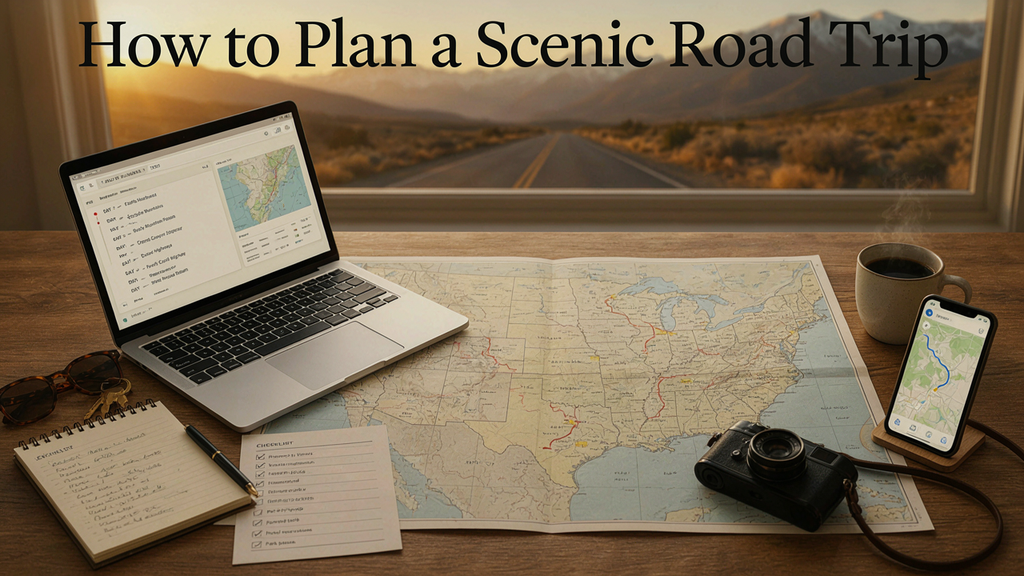
A scenic road trip is different from a point-to-point journey.
Instead of asking only:
“What’s the fastest route?”
Ask:
“What’s the most enjoyable route that fits my time?”
Look for:
- Mountain passes
- Coastal highways
- Forest roads
- Desert landscapes
- Historic routes
- National park roads
- Lakeside highways
- Small-town main streets
Scenic routes may take longer, so don’t choose one unless your schedule has enough flexibility.
Road Trip Planner for Different Types of Travelers
| Traveler Type | Planning Priority |
| Couples | Scenic routes and romantic stops |
| Families | Shorter drives and kid-friendly activities |
| Solo travelers | Safety and flexible schedules |
| Budget travelers | Fuel, free attractions, affordable lodging |
| Luxury travelers | Premium hotels and experiences |
| Outdoor travelers | Parks, trails, campsites and gear |
| Photography travelers | Sunrise, sunset and scenic viewpoints |
Your ideal itinerary should match your travel style.
Suggested Internal Linking Opportunities
For a travel website, this article can naturally link to related guides such as:
Best Travel Destinations in the USA
Best National Parks to Visit in 2026
Best Weekend Getaways in the USA
Offseason Travel Guide
Best Scenic Drives in America
USA Travel Packing List
How to Travel on a Budget
Best Family Vacation Destinations
Best Beaches in the USA
Best Places to Visit on a Cross-Country Road Trip
National Park Travel Guide
Best Travel Apps for Planning Trips
Use descriptive anchor text rather than generic phrases such as “click here.”
Suggested External Authority Sources

For stronger E-E-A-T signals, consider referencing authoritative resources where appropriate, including:
- National Park Service (NPS) — park rules, reservations, alerts, and visitor information
- U.S. Department of Transportation (USDOT) — transportation and road safety information
- Federal Highway Administration (FHWA) — highway and transportation resources
- National Weather Service (NWS) — official weather forecasts and alerts
- AAA — roadside assistance and travel-planning resources
- State Department of Transportation websites — state-specific road conditions and closures
- Official state tourism boards — destination information and attractions
- Official state park websites — park access, permits, camping, and seasonal information
Always verify current travel information directly with the relevant authority before publishing time-sensitive claims.
Frequently Asked Questions
What is the best way to plan a road trip?
Start by choosing your destinations, mapping an efficient route, estimating mileage and costs, booking essential accommodations, and leaving enough flexibility for unexpected stops.
How far should you drive each day on a road trip?
There is no universal limit. For sightseeing-focused trips, keeping many driving days around four to six hours can provide a comfortable balance. Longer driving days may work when moving between major destinations.
How do I calculate a road trip budget?
Add estimated fuel, hotels, food, attractions, parking, tolls, vehicle expenses, and an emergency buffer. Divide the total by the number of travel days if you want an approximate daily budget.
Should I plan every stop on a road trip?
No. Plan major attractions, accommodations, and important reservations, but leave some time for spontaneous stops and unexpected discoveries.
What should I pack for a USA road trip?
Bring travel documents, navigation tools, chargers, water, snacks, appropriate clothing, basic emergency supplies, and anything required for your specific destination or activities.
Is it cheaper to drive or fly?
It depends on the distance, number of travelers, vehicle, fuel prices, accommodation needs, and destination. Driving can provide more flexibility, but a long road trip may cost more when fuel, hotels, meals, and time are included.
How can I save money on a road trip?
Travel during less busy periods, compare accommodation prices, use free attractions, pack some meals, avoid unnecessary backtracking, monitor fuel costs, and set a realistic daily budget.
Should I use a digital road trip planner or a paper map?
Using both is ideal. Digital navigation provides convenience and live directions, while a paper map or offline information provides a useful backup when connectivity is limited.
How far in advance should I plan a road trip?
For simple trips, a few weeks may be enough. Popular national parks, major cities, holiday weekends, and peak-season destinations may require much earlier planning.
What makes a good road trip itinerary?
A good itinerary balances driving, sightseeing, rest, meals, accommodation, and flexibility. It should guide your trip without forcing you to follow a stressful minute-by-minute schedule.
Conclusion: Plan Smarter, Drive Further, and Enjoy the Journey
A road trip planner can turn a complicated driving vacation into a smooth, enjoyable adventure. By planning your route, budget, accommodations, fuel stops, activities, and travel essentials ahead of time, you can spend less time worrying about logistics and more time enjoying the open road.
The best road trips are not always the ones with the most destinations. Give yourself enough time to explore, take scenic detours, enjoy local food, rest when needed, and discover unexpected places along the way. A flexible itinerary gives you structure while still leaving room for adventure.
Read More:Mark Your Map: 25 Smart Travel Ideas, Planning Tips & Must-Visit Places for 2026