Planning a trip can feel overwhelming. You may have dozens of browser tabs open, conflicting hotel reviews to compare, restaurants to research, transportation options to understand, and attractions to fit into a limited number of days. A good travel guide can bring that information together in a much more manageable format. Frommer’s Travel Guides have been doing that for generations, combining destination information with practical planning advice and recommendations.
The Frommer’s name dates back to 1957, when Arthur Frommer published Europe on $5 a Day. The idea was simple but influential: international travel did not have to be reserved for wealthy travelers. His approach emphasized affordable accommodations, local restaurants, public transportation, and independent sightseeing. The brand has since expanded into destination guidebooks and online travel content.
Today, travelers can still use Frommer’s as a starting point for researching destinations, building itineraries, comparing neighborhoods, finding restaurants and attractions, and deciding how to spend their time. This guide explains what Frommer’s Travel Guides offer, who should use them, how to choose the right edition, their advantages and limitations, and how to combine them with modern travel tools.
Quick Answer
Yes. Frommer’s Travel Guides can be valuable for travelers who want curated destination information, practical itineraries, maps, restaurant and hotel recommendations, cultural context, and money-saving ideas in one resource.
They are especially useful for:
- First-time visitors
- Independent travelers
- Families planning vacations
- Travelers who prefer structured itineraries
- People who enjoy printed guidebooks
- Travelers researching major U.S. and international destinations
- Visitors who want recommendations beyond the most obvious tourist attractions
However, no guidebook should be your only source for information that changes quickly. Always verify current opening hours, prices, transportation schedules, reservation requirements, entry rules, and temporary closures before your trip.
What Are Frommer’s Travel Guides?
Frommer’s Travel Guides are destination-focused travel resources designed to help travelers research and organize trips. The collection includes destination-specific books covering cities, countries, regions, and specialized travel styles.
The brand’s roots are closely associated with practical and budget-conscious travel. Arthur Frommer’s original 1957 guide helped popularize the idea that ordinary Americans could travel internationally without spending a fortune.
The modern Frommer’s approach is broader. Depending on the destination and edition, a guide can cover:
- Attractions
- Hotels
- Restaurants
- Neighborhoods
- Transportation
- Suggested itineraries
- Walking tours
- Maps
- Cultural information
- Shopping
- Nightlife
- Family travel
- Travel planning advice
- Money-saving suggestions
Current editions demonstrate that the series remains active. For example, Frommer’s New York City 2026 is a full-color guide with maps, itineraries, transportation information, restaurant and hotel recommendations, and practical planning details.
A Brief History of Frommer’s Travel Guides
Understanding the history of Frommer’s helps explain why the brand remains recognizable among American travelers.
Arthur Frommer’s $5-a-Day Revolution
Arthur Frommer developed his travel-writing career after experiencing Europe while serving in the U.S. Army during the 1950s. His experiences inspired Europe on $5 a Day, published in 1957. The book challenged the idea that European travel needed to be expensive.
The concept became hugely influential because it focused on practical decisions travelers actually needed to make:
- Where can I stay?
- Where can I eat?
- How can I get around?
- What attractions are worth my time?
- How can I avoid unnecessary expenses?
That practical mindset became a defining part of the Frommer’s identity.
From Print Guidebooks to Digital Travel
Travel planning has changed dramatically since the 1950s. Travelers now have access to online maps, booking platforms, mobile apps, social media, review sites, and real-time transportation information.
Frommer’s adapted by expanding its digital presence while continuing to publish guidebooks. The company says its collection grew to nearly 100 guidebooks alongside Frommers.com and other travel products.
Arthur Frommer died in 2024 at age 95, but the Frommer’s brand continues under the broader editorial leadership associated with his daughter, Pauline Frommer.
What Can You Find in Frommer’s Travel Guides?

One reason travelers continue to use guidebooks is organization. Instead of searching separately for every part of a vacation, you can start with a resource that organizes the destination into useful categories.
Destination Overviews
Most comprehensive travel planning starts with understanding the destination.
A good guide can help you identify:
- Major neighborhoods
- Main attractions
- Local culture
- Transportation patterns
- Recommended trip lengths
- Popular day trips
- Areas best suited to different travelers
This information is particularly helpful when visiting a large city such as New York, Paris, London, Tokyo, or Rome.
Hotels and Accommodations
Accommodation recommendations can help travelers understand the differences between neighborhoods and price categories.
Instead of asking only, “What is the best hotel?”, consider:
Which neighborhood works best for my trip?
A family may value convenient transportation and larger rooms. A couple may prioritize walkability and restaurants. A solo traveler may care more about location and public transit.
Frommer’s-style destination research can help you make that decision before you start comparing individual properties.
Restaurants and Food
Food recommendations are another important part of destination planning.
Rather than building your entire food itinerary around viral social-media posts, use a guide to understand:
- Local specialties
- Neighborhood dining
- Restaurant price ranges
- Traditional foods
- Casual restaurants
- Fine dining
- Cafés and markets
Then verify current information before visiting.
Attractions and Things to Do
Guidebooks are useful for separating “famous” from “worth your time.”
A popular landmark may be essential for a first visit, while a smaller museum, neighborhood, market, park, or walking route could become your favorite memory.
Maps and Transportation
Maps remain one of the strongest reasons to carry a physical travel guide.
Modern editions can combine destination maps with transportation information. For example, the 2026 Frommer’s New York City guide includes maps showing subway stops and a dedicated subway map.
Best Ways to Use Frommer’s Travel Guides in 2026
A guidebook becomes much more useful when you use it as part of a larger planning system.
Start With the Destination Overview
Before choosing hotels or attractions, read the introductory sections.
Learn:
How the destination is organized.
Which neighborhoods interest you.
How transportation works.
How many days you realistically need.
Which attractions require advance planning.
This prevents you from building an itinerary around one famous attraction while ignoring the geography of the destination.
Build a Shortlist, Not a Giant To-Do List
Do not try to visit everything.
Create three categories:
Must See: Experiences you would regret missing.
Would Like to See: Good options if time allows.
Optional: Interesting but easy to skip.
This approach gives your vacation flexibility.
Use Suggested Itineraries
Itineraries are particularly helpful for first-time travelers.
A suggested itinerary can show how attractions fit together geographically and how much time you may need.
For example, instead of visiting attractions randomly across a large city, group nearby experiences into the same day.
Cross-Check Time-Sensitive Information
This is essential in 2026.
Travel information can change because of:
- Construction
- Temporary closures
- New reservation policies
- Seasonal schedules
- Price changes
- Transportation disruptions
- Restaurant closures
- Major events
Use the guide for research and context, then verify current operational details with official sources.
Frommer’s Travel Guides vs. Online Travel Research
The choice does not have to be either-or.
The smartest approach is often to combine a curated guidebook with current digital information.
| Feature | Frommer’s Travel Guides | Online Research |
| Curated recommendations | Strong | Varies |
| Real-time information | Limited | Strong |
| Physical maps | Often available | Usually digital |
| Long-form destination context | Strong | Varies |
| Current opening hours | Verify separately | Usually easier to check |
| Transportation updates | Verify separately | Strong |
| Offline access | Excellent with print | Depends on downloads/connectivity |
| Itinerary inspiration | Strong | Strong |
| Restaurant research | Curated starting point | Extensive reviews |
| Trip organization | Strong | Requires more sorting |
The key difference is curation versus immediacy.
Online information is excellent for checking what is happening today. A guidebook can be better at helping you understand the destination as a whole.
The Best Hybrid Strategy
Use Frommer’s Travel Guides for:
- Destination orientation
- Neighborhood research
- Itinerary ideas
- Cultural context
- Curated recommendations
- Offline reference
Use official websites and current digital tools for:
- Opening hours
- Ticket availability
- Current prices
- Transportation alerts
- Reservation rules
- Temporary closures
Frommer’s Travel Guides vs. Other Popular Guidebook Series
Different guidebook brands have different personalities and strengths. The best choice depends on your travel style.
| Guidebook Type | Often Best For | Typical Strength |
| Frommer’s | Independent and mainstream travelers | Practical recommendations and trip planning |
| Lonely Planet | Independent and adventurous travelers | Broad destination coverage |
| Rick Steves | Europe-focused travelers | Practical European travel advice |
| DK Eyewitness | Visual learners | Photography, maps, and visual overviews |
| Fodor’s | Destination research and recommendations | Hotels, restaurants, and attractions |
| Moon | Regional and interest-focused travel | Alternative destinations and road trips |
There is no universal winner.
A traveler planning a European city break may prefer one series, while someone taking a U.S. road trip may prefer another. Your destination, budget, trip length, and travel style should determine the choice.
Pros and Cons of Frommer’s Travel Guides
Pros
| Pros | Why It Matters |
| Long travel publishing history | The brand has decades of experience |
| Practical approach | Focuses on real trip-planning decisions |
| Destination-specific information | Easier to research a particular trip |
| Itinerary ideas | Helps first-time visitors structure their days |
| Maps | Useful for understanding neighborhoods |
| Offline reference | Print editions work without internet |
| Budget-conscious roots | Strong connection to practical travel |
Cons
| Cons | Why It Matters |
| Printed information can age | Prices and hours may change |
| Not every destination gets equal coverage | Check the available edition first |
| Physical books add luggage weight | Less convenient for minimalist travelers |
| Digital sources are faster for live updates | Current information still needs verification |
| Recommendations are subjective | Your preferences may differ from the author’s |
The biggest lesson is simple: use the guidebook as a planning tool, not as a live database.
How to Choose the Right Frommer’s Guide

Choosing the correct edition is more important than simply choosing the brand.
Choose a Destination-Specific Guide
If you are spending a week in one city, a dedicated city guide may be more useful than a massive country guide.
A city-specific guide can provide deeper information about:
- Neighborhoods
- Restaurants
- Museums
- Transportation
- Walking routes
- Local attractions
Check the Publication Year
Travel information becomes outdated.
Before buying, check:
- Publication year
- Edition number
- Destination
- Author
- Whether the book covers your specific travel area
Current listings show 2026 editions for destinations including Italy, Ireland, Hawaii, Paris, and New York City.
Consider Your Trip Length
For a short weekend trip, a compact or day-by-day guide may be easier to use.
For a two-week country trip, a comprehensive guide can make more sense.
Match the Guide to Your Travel Style
Ask yourself:
- Am I traveling with children?
- Do I care most about food?
- Do I want museums and history?
- Am I trying to save money?
- Will I rent a car?
- Do I prefer independent exploration?
- Do I need detailed transportation information?
The answers should determine which edition you choose.
Common Mistakes Travelers Make With Guidebooks
Even an excellent guide can be used poorly.
Buying an Old Edition
This is one of the biggest problems.
Restaurants close. Hotels change ownership. Prices rise. Transportation systems change.
Choose the newest practical edition available.
Treating Recommendations as Absolute
A guide’s recommendation is a starting point, not a command.
You may dislike a highly rated restaurant or love a place that receives less attention.
Trying to Follow Every Recommendation
Your vacation should not become a checklist competition.
Leave free time for unexpected discoveries.
Ignoring Geography
Do not plan five attractions on opposite sides of a large city for one afternoon.
Use maps to group nearby experiences.
Not Checking Official Sources
Always confirm information that affects money, tickets, transportation, safety, or entry requirements.
Forgetting Your Own Interests
A guide may recommend history museums, shopping areas, restaurants, parks, or nightlife. You do not need to do everything.
Build the trip around what you actually enjoy.
Expert Tips for Getting More From Frommer’s Travel Guides
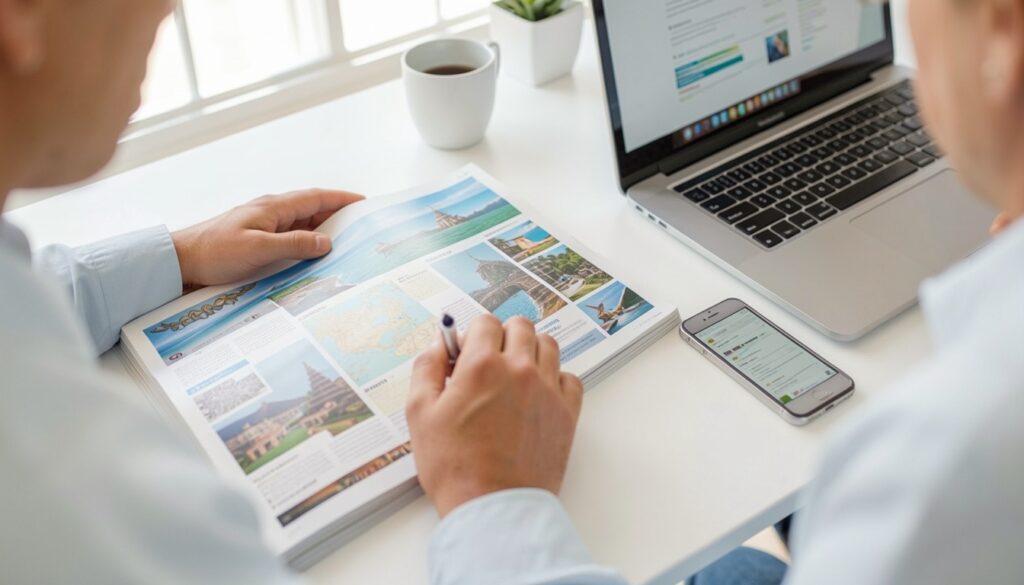
Read Before You Book
Do not wait until you arrive.
Use the guide during the research stage to understand neighborhoods and trip structure.
Mark Your Top Picks
Use bookmarks or notes to identify:
- Restaurants
- Attractions
- Hotels
- Walking tours
- Day trips
Create a Flexible Daily Plan
A useful day might include:
Morning: Major attraction
Lunch: Nearby local restaurant
Afternoon: Neighborhood exploration
Evening: Flexible activity
This is more realistic than scheduling every minute.
Use the Guide for Context
One of the greatest benefits of a guidebook is understanding why a place matters.
History and cultural context can make an attraction more meaningful.
Verify Before You Go
The closer you get to departure, the more you should verify time-sensitive details.
Combine Guidebook Research With Official Information
For major attractions, transportation systems, national parks, museums, and other services, check the relevant official source before committing your plans.
Frommer’s Travel Guides Checklist

Use this checklist when planning your next trip.
- Choose the correct destination guide.
- Check the publication year and edition.
- Decide how many days you need.
- Research neighborhoods before booking accommodation.
- Mark must-see attractions.
- Create a shortlist of restaurants.
- Review suggested itineraries.
- Study transportation information.
- Identify attractions requiring reservations.
- Verify current opening hours.
- Verify current ticket prices.
- Check official transportation updates.
- Leave free time in your itinerary.
- Save important digital information offline.
- Recheck important details shortly before departure.
Suggested Internal Linking Opportunities
If you publish travel content on a broader travel website, Frommer’s Travel Guides can naturally connect to related articles.
Consider internal links such as:
Best Travel Planning Apps — for travelers combining guidebooks with digital tools.
Ultimate USA Travel Planning Guide — a broader planning resource.
Best Places to Visit in the USA — destination inspiration.
How to Build a Travel Budget — connects with Frommer’s budget-conscious travel history.
Best Travel Guidebooks for Beginners — a natural comparison article.
How to Plan a European Vacation — useful for readers researching Europe.
Best Things to Do in New York City — connects with the Frommer’s New York City guide.
How to Choose a Hotel — supports accommodation research.
Travel Packing Checklist — useful after the itinerary is complete.
Best Travel Apps for International Trips — complements printed guidebook research.
Use descriptive anchor text rather than repeatedly linking the exact focus keyword.
Suggested External Authority Sources

For a trustworthy travel article, consider citing or consulting authoritative sources such as:
- Frommers.com — official Frommer’s travel information and editorial content.
- National Park Service — official U.S. national park information.
- U.S. Department of State — international travel advisories and passport information.
- Transportation Security Administration (TSA) — U.S. airport security information.
- Centers for Disease Control and Prevention (CDC) — travel health information.
- Official destination tourism boards — current local attractions, events, and visitor information.
- Official transportation agencies — current schedules, fares, and service alerts.
- Museum and attraction websites — current hours, tickets, and reservation requirements.
These sources should be used for current facts rather than relying exclusively on older guidebook editions.
Frequently Asked Questions
What are Frommer’s Travel Guides?
Frommer’s Travel Guides are destination-focused travel resources covering attractions, restaurants, hotels, transportation, itineraries, maps, neighborhoods, and practical travel advice.
Are Frommer’s Travel Guides still published?
Yes. Current listings show 2026 editions for multiple destinations, including New York City, Italy, Ireland, Hawaii, and Paris.
Are Frommer’s Travel Guides good for first-time travelers?
Yes. Their organized destination information, suggested itineraries, maps, and practical advice can make unfamiliar destinations easier to understand.
Are Frommer’s Travel Guides good for budget travelers?
They can be. The brand’s history is strongly connected to affordable travel. Arthur Frommer’s original guide focused on showing Americans how to experience Europe on a limited budget.
Are Frommer’s guides better than online travel blogs?
Neither is automatically better. Guidebooks provide curated structure and context, while online sources are generally better for rapidly changing information. Using both can produce better results.
How often should I buy a new travel guide?
Buy the newest practical edition available, particularly for destinations where prices, transportation, attractions, and reservation policies change frequently.
Can I use a Frommer’s guide without internet access?
Yes. A printed guidebook can be especially useful when you have limited connectivity or want to reduce dependence on your phone.
Do Frommer’s guides include maps?
Many editions include destination maps. For example, the Frommer’s New York City 2026 guide includes neighborhood and transportation-related maps.
Who writes Frommer’s Travel Guides?
Different destination guides are written by different travel writers and editors. For example, the 2026 New York City edition is authored by Pauline Frommer.
Should I rely only on Frommer’s when planning a trip?
No. Use the guide for destination research and planning, then verify current prices, opening hours, transportation schedules, reservations, and entry requirements with official sources.
Conclusion
Frommer’s Travel Guides remain a useful resource for travelers who want practical destination advice, organized itineraries, maps, restaurant recommendations, and helpful planning tips. While modern travel apps and websites provide real-time updates, a well-chosen Frommer’s guide can give you the bigger picture and help you build a smarter, more balanced trip.
For the best experience, combine Frommer’s Travel Guides with official destination websites, digital maps, current transportation information, and updated attraction details. Choose the latest edition, research your priorities, leave room for flexibility, and verify important details before you travel.
Read More:Travel: The Ultimate 2026 Guide to Smarter Trips, Better Planning & Unforgettable Adventures