Packing for a flight can be exciting until you reach airport security and realize one of your favorite toiletries isn’t allowed in your carry-on. Every day, thousands of travelers have drinks, cosmetics, shampoos, lotions, and other liquids taken away because they don’t understand the TSA 3-1-1 rule. Knowing the rule before you travel can save time, reduce stress, and help you move through security much faster.
Whether you’re flying for a weekend getaway, a business trip, or an international vacation, understanding the TSA 3-1-1 rule is one of the most important parts of preparing your carry-on bag. This guide explains everything in simple language, including what the rule means, why it exists, what items count as liquids, exceptions you should know, and practical tips that experienced travelers use every time they fly.
By the end of this guide, you’ll know exactly what you can bring through TSA security and how to pack smarter for your next flight.
Quick Answer
The TSA 3-1-1 rule allows each traveler to carry liquids, gels, creams, aerosols, and pastes in containers of 3.4 ounces (100 milliliters) or less. All containers must fit inside one clear, quart-sized, resealable plastic bag. Each passenger is allowed one such bag in their carry-on luggage. Items that exceed these limits should be packed in checked baggage unless they qualify
What Is the TSA 3-1-1 Rule?
The TSA 3-1-1 rule is a security policy created by the Transportation Security Administration (TSA) to regulate the amount of liquids passengers may carry in their cabin baggage. The rule applies to nearly every traveler flying from U.S. airports.
Instead of allowing large bottles of liquids through security, TSA limits travelers to small containers that are easier to inspect. This approach improves airport safety while still allowing passengers to carry essential personal care products.
Today, the rule applies to most domestic and international departures from U.S. airports and is recognized by many airport security agencies around the world.
Breaking Down the 3-1-1 Rule
The numbers are easy to remember once you understand them.
| Number | Meaning |
| 3 | Liquids must be in containers of 3.4 ounces (100 ml) or less |
| 1 | All containers must fit inside one quart-sized clear plastic bag |
| 1 | Each traveler may carry one plastic bag through security |
Think of it as:
3.4-ounce containers → 1 quart-sized bag → 1 bag per traveler
That’s why it’s called the TSA 3-1-1 rule.
Who Must Follow the Rule?
The rule generally applies to:
- Domestic U.S. travelers
- International passengers departing the United States
- Business travelers
- Vacation travelers
- Students
- Families
- Solo travelers
Unless you qualify for a TSA-approved exception, every passenger carrying liquids in a carry-on bag must follow these requirements.
Why Does the TSA 3-1-1 Rule Exist?
Many travelers wonder why they can’t simply bring a full-size shampoo bottle or water bottle through airport security. The answer lies in aviation safety.
The TSA 3-1-1 rule was introduced after international security experts identified potential risks involving liquid explosives. Restricting the amount of liquid each passenger can carry significantly reduces those risks while allowing travelers to bring essential personal items.
Rather than banning liquids completely, TSA developed a balanced approach that makes travel more convenient without compromising security.
Benefits of the TSA 3-1-1 Rule
The rule helps:
- Improve passenger safety
- Speed up security screening
- Reduce security risks
- Create consistent airport procedures
- Make inspections faster
- Simplify carry-on packing
Although it may seem inconvenient at times, the rule helps millions of travelers pass through airport checkpoints safely every day.
Is the Rule the Same at Every Airport?
For flights departing U.S. airports, the TSA 3-1-1 rule is generally consistent. However, international airports may have additional security procedures or slight differences depending on the country.
If your trip includes multiple countries, always check the security rules for your return flight as well.
Understanding the Meaning of “3-1-1”
Many first-time travelers misunderstand the numbers in the TSA 3-1-1 rule. Let’s make them simple.
The “3” Means 3.4 Ounces (100 ml)
Each liquid container must hold no more than 3.4 ounces (100 milliliters).
Examples include:
- Travel shampoo
- Toothpaste
- Face wash
- Sunscreen
- Conditioner
- Lotion
- Hair gel
- Mouthwash
- Hand sanitizer (subject to current TSA policies)
- Liquid makeup
Even if a bottle contains only a small amount of liquid, the container itself must not be larger than 3.4 ounces (100 ml).
For example:
❌ A 10-ounce shampoo bottle with only 2 ounces left is not allowed.
✅ A 3-ounce travel bottle filled completely is allowed.
The First “1” Means One Quart-Sized Bag
All approved liquid containers must fit comfortably inside:
- One transparent bag
- Quart-sized
- Resealable
- Easy for TSA officers to inspect
Using multiple bags is not permitted for one passenger.
The Second “1” Means One Bag Per Traveler
Every passenger can bring only one quart-sized bag containing liquids in their carry-on luggage.
Families traveling together can each have their own bag, meaning a family of four may bring four separate quart-sized liquid bags.
What Counts as a Liquid Under TSA Rules?
One of the biggest mistakes travelers make is assuming only water or drinks count as liquids. In reality, TSA considers many everyday products to be liquids, gels, creams, pastes, or aerosols.
Here are common items that fall under the TSA 3-1-1 rule:
| Item | Counts as Liquid? |
| Shampoo | ✅ Yes |
| Conditioner | ✅ Yes |
| Toothpaste | ✅ Yes |
| Lotion | ✅ Yes |
| Face cream | ✅ Yes |
| Sunscreen | ✅ Yes |
| Hair gel | ✅ Yes |
| Liquid makeup | ✅ Yes |
| Mascara | ✅ Yes |
| Lip gloss | ✅ Yes |
| Perfume | ✅ Yes |
| Body wash | ✅ Yes |
| Liquid soap | ✅ Yes |
| Shaving cream | ✅ Yes |
| Aerosol deodorant | ✅ Yes |
Many travelers are surprised that toothpaste, peanut butter, mascara, and even some cosmetic products are treated as liquids under TSA guidelines.
Carry-On vs. Checked Bags: Understanding the Difference
One of the most common questions travelers ask is whether the TSA 3-1-1 rule applies to every bag they bring on a flight. The answer is no. The rule only applies to carry-on luggage that passes through TSA security checkpoints.
If you’re packing larger bottles of shampoo, body wash, sunscreen, or other toiletries, you can usually place them in your checked baggage. Since checked bags are screened differently, they are not subject to the same 3.4-ounce liquid limit.
Understanding this difference can save you from having expensive products confiscated at the airport.
Carry-On vs. Checked Bag Comparison
| Item | Carry-On Bag | Checked Bag |
| Shampoo | Up to 3.4 oz | Full-size allowed |
| Conditioner | Up to 3.4 oz | Full-size allowed |
| Lotion | Up to 3.4 oz | Full-size allowed |
| Sunscreen | Up to 3.4 oz | Full-size allowed |
| Perfume | Up to 3.4 oz | Larger bottles allowed (subject to airline safety rules) |
| Water bottle | Must be empty before security | Can be packed if securely sealed |
| Drinks | Limited by TSA 3-1-1 rule | Allowed if properly packed |
| Toothpaste | Up to 3.4 oz | Full-size allowed |
Travel Tip: If you need large toiletries for a longer trip, pack them in your checked suitcase instead of your carry-on.
What Liquids Can You Bring Through TSA Security?
The TSA 3-1-1 rule allows many everyday travel essentials, provided they are in containers of 3.4 ounces (100 ml) or less and fit inside your quart-sized bag.
Common Approved Liquids
- Shampoo
- Conditioner
- Toothpaste
- Mouthwash
- Face wash
- Facial cleanser
- Moisturizer
- Sunscreen
- Liquid foundation
- Liquid concealer
- Lip gloss
- Mascara
- Perfume
- Cologne
- Body wash
- Hand cream
- Hair serum
- Hair gel
- Liquid soap
- Contact lens solution (travel-size unless medically necessary)
These items should be easy to access during security screening if requested by TSA officers.
Liquids That Often Confuse Travelers

Some products don’t look like liquids, but TSA still considers them liquids, gels, creams, or pastes.
Products That Follow the TSA 3-1-1 Rule
| Product | TSA Treats It As |
| Peanut butter | Liquid/Gel |
| Yogurt | Liquid |
| Cream cheese | Liquid |
| Salsa | Liquid |
| Honey | Liquid |
| Maple syrup | Liquid |
| Jam | Gel |
| Pudding | Gel |
| Jelly | Gel |
| Soft cheese | Gel |
| Hair wax | Gel |
| Lip balm (soft) | Gel |
| Cosmetic cream | Cream |
If you’re unsure about an item, it’s safest to assume it falls under the TSA 3-1-1 rule.
Can You Bring Water Through TSA?
This is one of the most frequently asked travel questions.
Before Security
A full bottle of water cannot go through TSA security if it exceeds the 3.4-ounce limit.
After Security
Once you’ve passed the TSA checkpoint, you may:
- Buy bottled water
- Refill a reusable bottle at a water station
- Purchase coffee, juice, or soda
- Carry those drinks onto your flight
Travel Tip
Bring an empty reusable water bottle. Fill it after clearing security to stay hydrated without paying airport prices.
Can You Bring Ice Through TSA?
Yes—but there are conditions.
Allowed
- Frozen ice packs
- Solid ice cubes
- Frozen gel packs
Not Allowed
If the ice melts into liquid before inspection, it becomes subject to the TSA 3-1-1 rule unless it qualifies for an exception.
Travel-Size Toiletries: Your Best Friend
Travel-size toiletries are designed to meet TSA requirements and make packing easier.
Benefits
- Save luggage space
- Meet TSA liquid limits
- Reduce bag weight
- Easy to organize
- Perfect for weekend trips
Many brands sell travel-size versions of:
- Shampoo
- Conditioner
- Body wash
- Lotion
- Sunscreen
- Face cleanser
- Toothpaste
- Hair products
You can also buy reusable 3-ounce travel bottles and fill them with your favorite products before your trip.
What Happens If Your Bottle Is Too Large?
Many travelers believe that having only a small amount of liquid inside a large bottle is acceptable. Unfortunately, that’s not how the TSA 3-1-1 rule works.
Example
❌ 12-ounce shampoo bottle with only 1 ounce remaining
Result: TSA will likely require you to discard it.
Correct Example
✅ 3-ounce travel bottle filled completely
Result: Allowed through security.
The rule is based on the size of the container, not the amount of liquid inside it.
Duty-Free Liquids: Are They Allowed?
If you buy liquids at a duty-free shop after passing airport security, they’re generally allowed onboard.
Examples include:
- Perfume
- Alcohol (subject to airline and customs rules)
- Cosmetics
- Gift items
Duty-free purchases are usually sealed in a tamper-evident security bag with proof of purchase. Keep the bag sealed until instructed otherwise.
If you have connecting international flights, additional screening rules may apply.
Best TSA-Approved Containers
Using the right travel containers makes packing much easier.
Look for Containers That Are:
- 3.4 ounces (100 ml) or smaller
- Leak-proof
- Refillable
- BPA-free
- Clearly labeled
- Easy to clean
Silicone travel bottles are especially popular because they are flexible, reusable, and less likely to leak.
Smart Packing Strategies for Faster Security
Experienced travelers know that organization speeds up airport screening.
Follow These Tips
✔ Pack all liquids together in one quart-sized clear bag.
✔ Place the bag near the top of your carry-on.
✔ Tighten bottle caps securely.
✔ Use zip-top bags to prevent leaks.
✔ Separate electronics from toiletries if requested.
✔ Remove oversized liquids before arriving at the airport.
✔ Double-check your bag the night before your flight.
A few minutes of preparation can help you avoid delays and keep the security line moving smoothly.
Real-Life Example
Imagine you’re flying from New York to Los Angeles for a five-day vacation.
Your Carry-On Contains:
- 3 oz shampoo ✅
- 2 oz conditioner ✅
- 3 oz sunscreen ✅
- 3 oz face wash ✅
- Travel toothpaste ✅
- Mascara ✅
- Lip gloss ✅
All items fit inside one quart-sized clear bag, so they comply with the TSA 3-1-1 rule.
However, if you also pack:
- 16 oz body lotion ❌
- 12 oz shampoo bottle ❌
These items are not allowed in your carry-on and should instead be placed in your checked luggage.
Featured Snippet: Can You Bring Full-Size Toiletries in Checked Bags?

Yes. The TSA 3-1-1 rule only applies to carry-on luggage. Full-size toiletries such as shampoo, conditioner, lotion, body wash, and sunscreen can generally be packed in checked baggage, provided they comply with airline safety regulations.
TSA Exceptions to the 3-1-1 Rule
While the TSA 3-1-1 rule applies to most liquids in carry-on bags, the TSA recognizes that some passengers need to travel with essential medical items, baby supplies, and special dietary products. These items may be allowed in quantities greater than 3.4 ounces (100 ml) after additional screening.
If you’re carrying an exempt item, it’s a good idea to inform the TSA officer before your belongings go through the X-ray machine. Separating these items from the rest of your carry-on can also help speed up the screening process.
Items That May Qualify for Exceptions
| Item | Larger Than 3.4 oz Allowed? | Notes |
| Prescription medications | ✅ Yes | Declare at security if requested |
| Liquid medications | ✅ Yes | May require additional screening |
| Baby formula | ✅ Yes | Reasonable quantities allowed |
| Breast milk | ✅ Yes | Even without a child present in some situations |
| Toddler drinks | ✅ Yes | Subject to screening |
| Juice for medical needs | ✅ Yes | Inform TSA officer |
| Ice packs for medicine | ✅ Yes | Allowed when medically necessary |
| Nutritional supplements | ✅ Yes | May be inspected separately |
Expert Tip: Keep medications in their original labeled containers whenever possible. This helps avoid delays and makes identification easier during security screening.
Traveling With Babies and Young Children
Flying with children often requires more supplies than a standard carry-on allows. Fortunately, TSA provides flexibility for families.
Parents may carry reasonable amounts of:
- Baby formula
- Breast milk
- Toddler drinks
- Baby food pouches
- Purees
- Juice for infants
- Cooling gel packs
- Ice packs needed to keep food cold
These items are generally screened separately and are not limited by the standard TSA 3-1-1 rule.
Family Travel Tips
- Pack baby items together in one bag.
- Inform the TSA officer before screening.
- Allow extra time at the airport.
- Bring only what you reasonably need for the trip.
Traveling With Prescription and Over-the-Counter Medications
Many travelers worry about bringing medications on a plane. The good news is that most medications are allowed in both carry-on and checked luggage.
Carrying medications in your carry-on is often the safest choice because checked bags can sometimes be delayed or misplaced.
Best Practices
✔ Keep medications with you.
✔ Carry copies of prescriptions for controlled medications if traveling internationally.
✔ Leave medicine in its original packaging when possible.
✔ Inform TSA officers if carrying large quantities of liquid medicine.
Examples include:
- Liquid cough medicine
- Insulin
- Eye drops
- Saline solution
- Prescription syrups
These may exceed the standard liquid limit when medically necessary.
Does the TSA 3-1-1 Rule Apply to Food?
Yes—but only to foods considered liquids, gels, creams, or pastes.
Solid foods usually pass through security without issue, although they may receive additional screening.
Examples of Solid Foods
| Food | Usually Allowed? |
| Sandwiches | ✅ Yes |
| Cookies | ✅ Yes |
| Chips | ✅ Yes |
| Nuts | ✅ Yes |
| Fruit | ✅ Yes |
| Vegetables | ✅ Yes |
| Granola bars | ✅ Yes |
| Crackers | ✅ Yes |
Foods That Count as Liquids
| Food | Subject to TSA 3-1-1 Rule? |
| Peanut butter | ✅ Yes |
| Yogurt | ✅ Yes |
| Salsa | ✅ Yes |
| Soup | ✅ Yes |
| Honey | ✅ Yes |
| Maple syrup | ✅ Yes |
| Creamy dips | ✅ Yes |
| Gravy | ✅ Yes |
| Jam | ✅ Yes |
When packing snacks, choose solid foods whenever possible to avoid unnecessary delays.
Does the TSA 3-1-1 Rule Apply to International Flights?
If your journey begins at a U.S. airport, the TSA 3-1-1 rule applies to your carry-on baggage.
However, if you’re departing from another country on your return trip, you’ll need to follow that country’s airport security regulations.
Most countries use a 100 ml liquid limit, but procedures can differ slightly.
Before traveling internationally, check:
- Airport security rules
- Customs regulations
- Airline baggage policies
- Duty-free restrictions
Being prepared can help you avoid surprises during your return journey.
Common Mistakes Travelers Make
Even experienced travelers sometimes forget the details of the TSA 3-1-1 rule. Avoiding these common mistakes can save time and prevent the loss of personal items.
1. Packing Full-Size Toiletries
Large bottles of shampoo, lotion, or sunscreen are among the most frequently confiscated items at airport security.
Better Option: Transfer products into travel-size containers.
2. Forgetting About Toothpaste
Many travelers don’t realize toothpaste counts as a liquid or gel.
Always pack a travel-size tube in your quart-sized bag.
3. Bringing a Full Water Bottle
A reusable water bottle is fine—but it should be empty before you reach the TSA checkpoint.
Fill it after passing through security.
4. Using Multiple Plastic Bags
The TSA 3-1-1 rule allows one quart-sized bag per traveler, not several smaller bags.
5. Waiting Until Security to Organize Liquids
Digging through your luggage at the checkpoint slows down the line and increases stress.
Keep your liquid bag easily accessible.
6. Assuming Half-Full Bottles Are Allowed
Remember, TSA checks the container size, not how much liquid remains inside.
7. Forgetting Aerosol Products
Items like hairspray, shaving cream, and spray deodorant are also subject to the TSA 3-1-1 rule.
Expert Tips for Stress-Free Airport Security
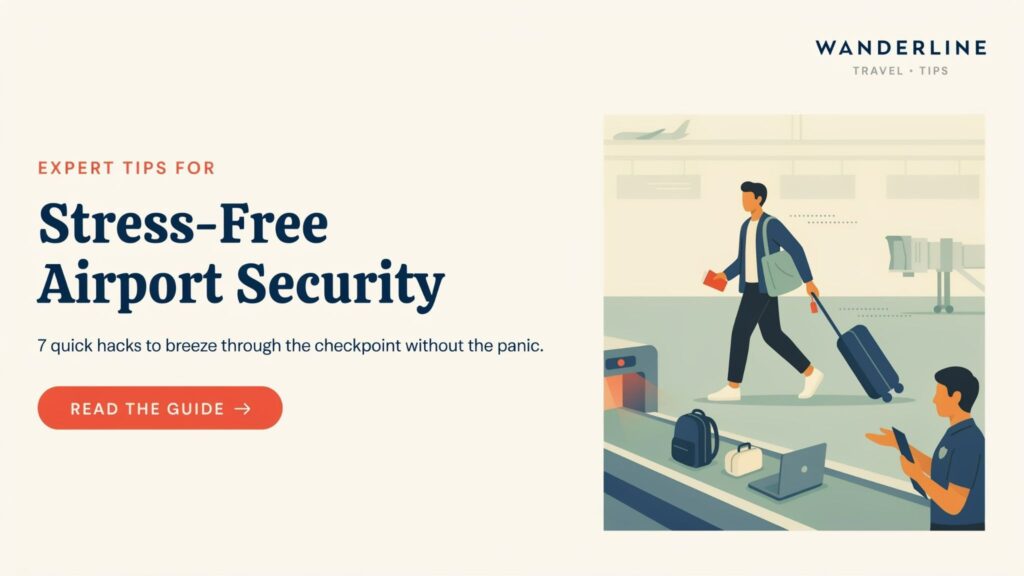
Frequent travelers follow simple habits that make airport security much easier.
Pack the Night Before
Avoid last-minute packing. Double-check all liquids before leaving home.
Buy Reusable Travel Bottles
Instead of purchasing travel-size toiletries every trip, invest in refillable bottles.
They’re eco-friendly and save money over time.
Label Every Bottle
If you use refillable containers, clearly label each one to avoid confusion.
Use Leak-Proof Bags
Place your quart-sized liquid bag inside another resealable bag to protect your clothing from spills.
Wear Easy-to-Remove Shoes
While not related directly to the TSA 3-1-1 rule, this speeds up the screening process.
Keep Travel Documents Ready
Have your ID and boarding pass easily accessible before reaching the checkpoint.
Check TSA Updates Before Every Trip
Rules occasionally change due to security updates or temporary policies.
Checking the latest guidance before traveling helps avoid surprises.
TSA 3-1-1 Rule Pre-Flight Checklist
Use this checklist before heading to the airport.
✅ Carry-On Checklist
- □ All liquids are 3.4 ounces (100 ml) or smaller.
- □ Every liquid fits inside one quart-sized clear bag.
- □ Only one liquid bag per traveler.
- □ Water bottle is empty.
- □ Full-size toiletries are packed in checked luggage.
- □ Medications are easily accessible.
- □ Baby supplies are packed separately if needed.
- □ Quart-sized bag is placed near the top of the carry-on.
- □ Electronics are easy to remove if requested.
- □ Travel documents are ready.
Completing this checklist can help you move through security more quickly and with less stress.
Pros and Cons of the TSA 3-1-1 Rule
| Pros | Cons |
| Improves aviation security | Limits the amount of liquids you can carry |
| Speeds up security screening | Requires extra planning before packing |
| Creates consistent airport procedures | Large toiletries must go in checked luggage |
| Encourages organized packing | Can be inconvenient for long trips |
| Helps reduce prohibited items at checkpoints | Travelers may need to buy travel-size products |
FAQs
What is the TSA 3-1-1 rule?
The TSA 3-1-1 rule allows passengers to bring liquids, gels, creams, aerosols, and pastes in containers of 3.4 ounces (100 ml) or less. All containers must fit inside one clear, quart-sized, resealable plastic bag, and each traveler is allowed one bag in their carry-on.
Can I bring a full-size shampoo bottle in my carry-on?
No. A full-size shampoo bottle is not allowed in your carry-on, even if it contains only a small amount of shampoo. The container itself must be 3.4 ounces (100 ml) or smaller to comply with the TSA 3-1-1 rule.
Does toothpaste count as a liquid?
Yes. TSA classifies toothpaste as a gel, so it falls under the TSA 3-1-1 rule. Use a travel-size tube that is 3.4 ounces (100 ml) or less.
Can I bring an empty water bottle through TSA?
Yes. Empty reusable water bottles are allowed through airport security. Once you pass the TSA checkpoint, you can refill the bottle at a water fountain or refill station.
Are medications exempt from the TSA 3-1-1 rule?
Yes. Medically necessary liquids, prescription medications, and certain over-the-counter liquid medicines may be carried in quantities larger than 3.4 ounces. Inform the TSA officer during the screening process.
Can I take baby formula and breast milk on a plane?
Yes. Baby formula, breast milk, toddler drinks, and baby food are generally exempt from the standard liquid limit. TSA allows reasonable quantities, although additional screening may be required.
Can I pack full-size toiletries in checked luggage?
Yes. The TSA 3-1-1 rule applies only to carry-on luggage. Full-size toiletries can generally be packed in checked baggage, provided they meet airline safety requirements.
Does makeup count as a liquid?
Some makeup products do. Liquid foundation, concealer, mascara, lip gloss, cream blush, and similar items are subject to the TSA 3-1-1 rule, while powder makeup is generally not.
What happens if my liquid exceeds the TSA limit?
If a liquid container exceeds 3.4 ounces (100 ml) and does not qualify for an exception, TSA will ask you to discard it or place it in checked baggage before your flight.
Is the TSA 3-1-1 rule the same for international flights?
If your flight departs from a U.S. airport, you must follow the TSA 3-1-1 rule. Other countries have similar liquid restrictions, but travelers should always check local airport security regulations before returning to the United States.
Conclusion
Understanding the TSA 3-1-1 rule is one of the easiest ways to make air travel smoother and less stressful. By following the simple 3-1-1 guidelines—using containers of 3.4 ounces (100 ml) or less, placing them in one clear quart-sized bag, and carrying one bag per traveler—you can move through airport security with confidence.
Remember that medications, baby formula, and other medically necessary liquids may qualify for exceptions, while full-size toiletries should generally be packed in checked luggage. Preparing your carry-on before you leave home saves time, prevents unnecessary delays, and reduces the chance of having items confiscated.
Whether you’re taking a quick domestic trip or flying internationally, keeping the TSA 3-1-1 rule in mind will help you pack smarter and travel with peace of mind
Read More: REAL ID Deadline 2026: The Ultimate Guide to What You Need Before You Fly in the U.S.